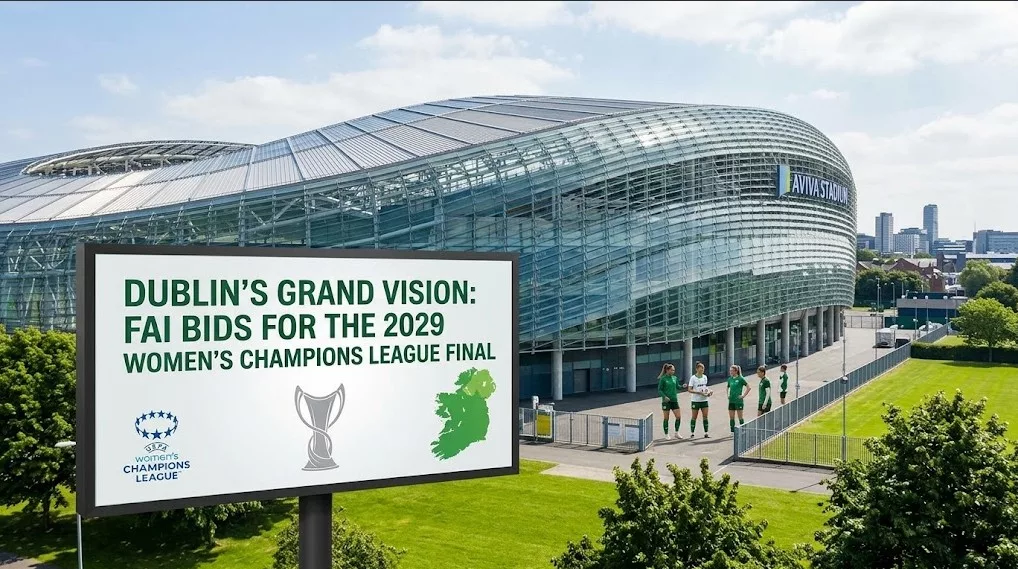
Dublin Sets Sights on European Glory
The FAI has officially thrown its hat into the ring to host the 2029 Women’s Champions League final. This ambitious move signals a massive statement of intent from Irish sporting authorities, aiming to bring the pinnacle of European women’s club football to the heart of Dublin. The proposed venue for this blockbuster event is none other than the iconic Aviva Stadium, a ground already steeped in rich sporting history and renowned for its electric atmosphere.
Inside the Aviva Stadium Pitch
Hosting a major UEFA event requires world-class infrastructure, and the Aviva Stadium fits the bill perfectly. With a seating capacity of over 51,000, the arena provides the grand stage necessary for a spectacle of this magnitude. The stadium recently showcased its capability by successfully hosting the 2024 Europa League final. Securing the women’s equivalent would further cement Dublin’s reputation as a premier destination for top-tier international sports. As reported by BBC Sport, UEFA has been increasingly prioritizing venues that can guarantee massive crowds and flawless logistical execution for their flagship women’s events.
Comparing Recent Final Venues
To understand the scale of what the Irish delegation is bidding for, it is helpful to look at the recent trajectory of the tournament’s final matches. The steady growth in attendance and venue size is a clear testament to the surging popularity of the sport across the continent.
| Year | Stadium | City | Reported Attendance |
|---|---|---|---|
| 2022 | Juventus Stadium | Turin | 32,257 |
| 2023 | Philips Stadion | Eindhoven | 33,147 |
| 2024 | San Mames | Bilbao | 50,827 |
| 2029 (Proposed) | Aviva Stadium | Dublin | 51,700 (Capacity) |
The Rise of Irish Womens Soccer
This bid does not exist in a vacuum; it rides the crest of a wave generated by the Republic of Ireland women’s national team. Following their historic qualification and participation in the 2023 FIFA Women’s World Cup, the appetite for the women’s game in Ireland has never been higher. Bringing the biggest club match in Europe to Dublin would serve as a powerful catalyst to inspire the next generation of young girls lacing up their boots across the country. Grassroots programs would likely see a massive influx of interest, aligning perfectly with the long-term developmental goals of the national association.
Economic Boost and UEFA Standards
Beyond the undeniable sporting prestige, hosting such a monumental event brings a significant economic windfall. Thousands of traveling fans, media personnel, and corporate sponsors would descend upon Dublin, injecting millions of euros into the local hospitality and tourism sectors. According to data published by UEFA regarding past finals, host cities experience a remarkable surge in international visibility and revenue. The bidding process, however, is fiercely competitive, demanding rigorous assurances regarding transport, accommodation, and dedicated fan zone facilities.
What Comes Next for the Bid
The formal submission is just the first step in a lengthy and meticulous evaluation process by European football’s governing body. The Irish delegation will now need to present a flawless logistical plan and demonstrate unwavering governmental support to stand out from the pack. While rival bids from other European powerhouses are entirely expected, Dublin’s proven track record with major tournaments gives them a solid fighting chance. Fans and pundits alike will be watching closely as the selection committee deliberates over the coming months, hoping the luck of the Irish prevails for 2029.