From Parisian Heights to London Lows
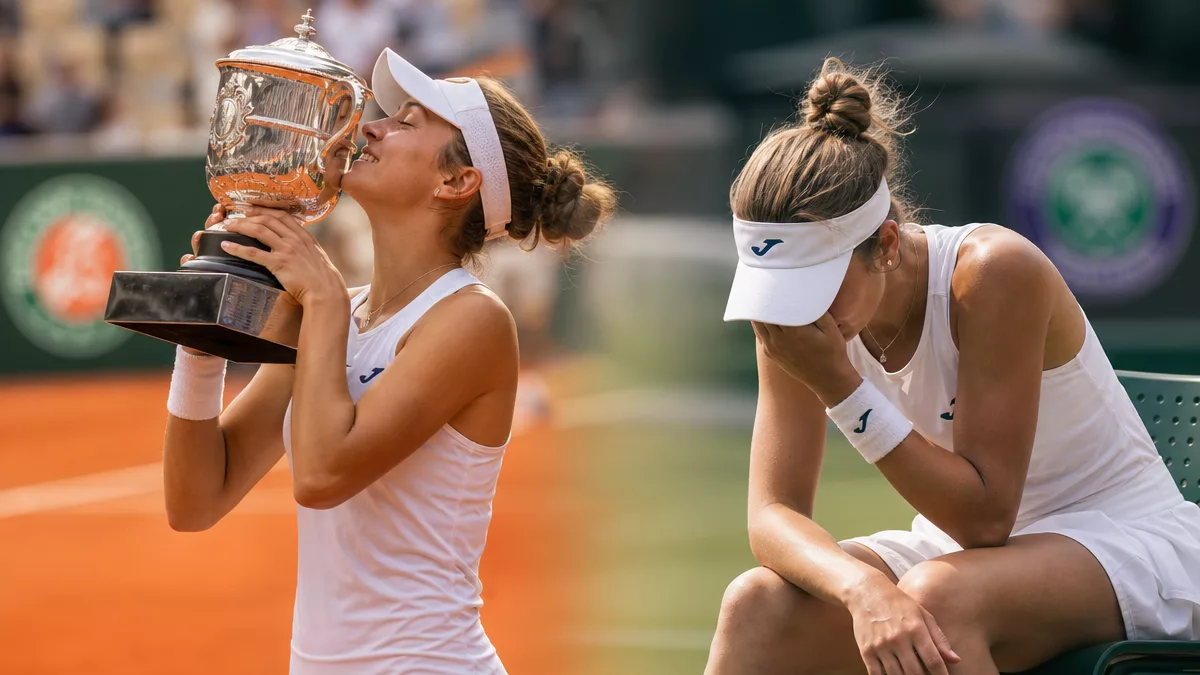
The world of professional tennis is one of razor-thin margins, where triumph and disaster often stand shoulder to shoulder. No one experienced this brutal dichotomy more acutely than Maja Chwalinska on the opening day of the 2026 Wimbledon Championships. Just weeks after scripting one of the most improbable and heartwarming Grand Slam stories in recent memory by surging from the qualifying rounds to the final of the French Open, the Polish sensation suffered a devastating first-round exit at the All England Club. In a cruel twist of fate, Chwalinska’s Wimbledon dreams were dashed not just by a resilient opponent, but by a catastrophic injury sustained while holding a match point, leading to a stunning victory for Thai qualifier Mananchaya Sawangkaew.
The Unraveling on Court 12
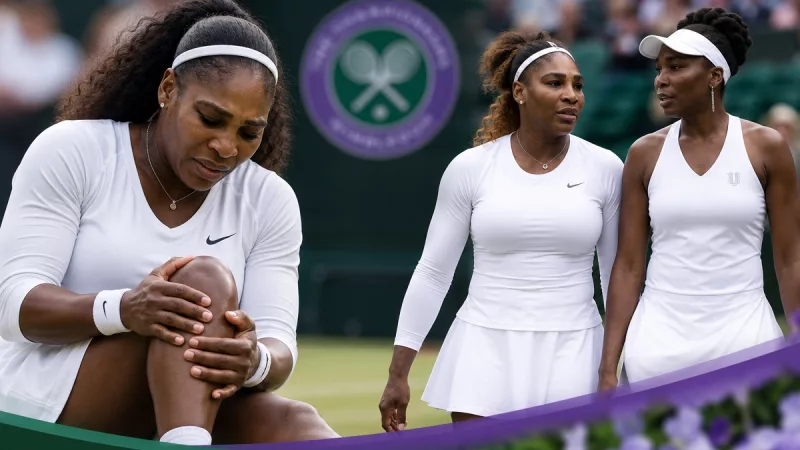
The match began as many expected it would. Chwalinska, buoyed by the confidence of her Roland Garros performance and a wildcard entry that saw her seeded No. 20, looked every bit the newly minted top-25 player. She dictated play from the baseline, her left-handed strokes finding their rhythm on the grass. After securing the first set 6-2, she powered her way to a 5-2 lead in the second, seemingly moments away from a routine opening victory. At 40-30, with a match point in hand, disaster struck. As she moved behind the baseline to retrieve a shot, her footing gave way on the slick turf. She slipped, and while Sawangkaew calmly put away a volley to save the point, the damage was done. Chwalinska required a medical timeout for treatment on her right leg. Though she returned to the court, her movement was severely compromised. The momentum had irrevocably shifted. Sawangkaew, sensing her opponent’s vulnerability, held her nerve, clawing back to 5-5 and then snatching the second set 7-5. The deciding set was a painful watch for Chwalinska’s supporters. Despite an early break, she was a shadow of her former self, barely able to push off on her injured leg. Sawangkaew, the world No. 164, capitalized fully, winning the final six games to seal a memorable and heart-wrenching victory.
A Fairytale in Paris: The Rise of Maja Chwalinska
To understand the magnitude of this Wimbledon shock, one must revisit the events in Paris just a few weeks prior. Chwalinska arrived at Roland Garros ranked No. 114 in the world, a talented but largely unheralded player on the WTA Tour. Her goal was simple: to make it through qualifying into the main draw for the first time. She did that, and then so much more. Over a magical fortnight, she won nine consecutive matches, toppling seeds and established stars alike. Her victories included straight-sets wins over Zheng Qinwen and 23rd seed Elise Mertens. She went on to defeat Maria Sakkari, 22nd seed Anna Kalinskaya, and 25th seed Diana Shnaider to become the first qualifier in the Open Era to reach the final at Roland Garros. The run was historic, drawing comparisons to Emma Raducanu’s 2021 US Open triumph. Although she lost the final to the prodigious Mirra Andreeva, Chwalinska captured the hearts of the tennis world and saw her ranking skyrocket 93 places to a career-high of No. 21.
The Weight of Expectation
Her Parisian success brought with it a level of fame and expectation she had never before experienced. Upon returning to Poland, she was greeted by huge crowds at the airport, a reception befitting a national hero. In her pre-Wimbledon press conference, however, the 24-year-old candidly admitted to struggling with the sudden attention, even confessing to feeling “like an imposter.” She remarked, “I felt like an imposter a bit, like I don’t deserve it. Like, guys, it was just one tournament.” This newfound pressure, combined with a crucial decision, may have played a role in her London downfall. Opting to rest after her grueling clay-court campaign, Chwalinska did not play any grass-court warm-up tournaments, making the first-round match against Sawangkaew her first competitive outing on the surface for over a year. This lack of preparation on the unique and demanding grass courts proved to be a significant factor.
Introducing Mananchaya Sawangkaew: Thailand‘s Rising Star
While Chwalinska’s story dominated the headlines, the victory belonged to Mananchaya Sawangkaew, a formidable competitor carving out her own path. The 23-year-old from Sing Buri is no stranger to success. A former student-athlete at Oklahoma State University, she has steadily climbed the professional ranks. Earlier in 2026, she captured her maiden WTA 125 title at the Mumbai Open, a significant milestone in her career. Her journey to the Wimbledon main draw was a testament to her fighting spirit; she won three grueling qualifying matches, including a final-round thriller where she saved three match points to overcome Oceane Dodin 5-7, 7-5, 6-1. This was her second Grand Slam main draw appearance of the year, having also qualified for the Australian Open in January. The win over a top-30 player like Chwalinska is the biggest of her career and marks her as the first Thai player to win a match at Wimbledon since 2018.
Tale of the Tape: A Statistical Deep Dive
On paper, the matchup presented a fascinating contrast between Chwalinska’s meteoric rise and Sawangkaew’s steady, grass-honed form. While the Polish star held a significant ranking advantage, the Thai qualifier’s recent match play on the surface gave her a distinct edge.
| Statistic | Maja Chwalinska | Mananchaya Sawangkaew |
|---|---|---|
| WTA Singles Ranking | 21 | 164 |
| 2026 Win/Loss Record | 29 / 10 | 30 / 11 |
| Career Prize Money | $2,497,381 | $174,706 |
| Plays | Left-Handed | Right-Handed |
| Career Grass Record (Challenger/ITF) | 3-2 (60.0%) | 6-11 (54.6%) |
| 2026 Grass Matches Played (pre-Wimbledon) | 0 | 9 (7 wins, 2 losses) |
The Perilous Transition: From Clay to Grass
The swift transition from the high-bouncing clay of Paris to the low, fast-skidding grass of London is notoriously one of the most difficult challenges in tennis. Players have minimal time to adjust their footwork, timing, and strategy. The prolonged, grinding rallies of the French Open are replaced by short, sharp points where the serve and first strike are paramount. For Chwalinska, whose game is built on defense and consistency, the adjustment is particularly stark. Her decision to skip the warm-up events, while understandable from a physical recovery standpoint, left her exposed. In contrast, Sawangkaew had spent the preceding weeks immersing herself in grass-court tennis, playing nine matches and fine-tuning the specific skills required to succeed on the surface. This disparity in preparation was a crucial, if not decisive, element in the match’s outcome.
What Lies Ahead?
For Maja Chwalinska, the immediate future is one of recovery and reflection. The severity of her leg injury will determine the course of her summer hard-court season. Beyond the physical healing, she must also navigate the psychological challenges of her new status as a Grand Slam finalist and top-tier player. This painful experience at Wimbledon, while bitter, will be a valuable lesson in managing schedules, expectations, and the unique demands of the tour. For Mananchaya Sawangkaew, this victory is a potential career-defining moment. She moves into the second round with a surge of confidence and the knowledge that she can compete with and defeat the very best. She has a golden opportunity to build on this success and make a deep run at the world’s most prestigious tournament, inspiring a new generation of tennis players in Thailand along the way.