A New British Star Emerges on the Hallowed Grass
In the heart of London, where the echoes of tennis legends reside, a new local hero captured the imagination of the British public. Arthur Fery, a wildcard entry ranked 391st in the world at the time, stepped onto the iconic grass courts of the Wimbledon Championships not just as a competitor, but as a beacon of hope for a nation yearning for a homegrown champion. With a performance brimming with grit, skill, and youthful exuberance, Fery shouldered the weight of expectation, delivering a memorable campaign that, while ultimately cut short, provided a tantalizing glimpse into the future of British men’s tennis.
The First-Round Comeback That Ignited a Nation
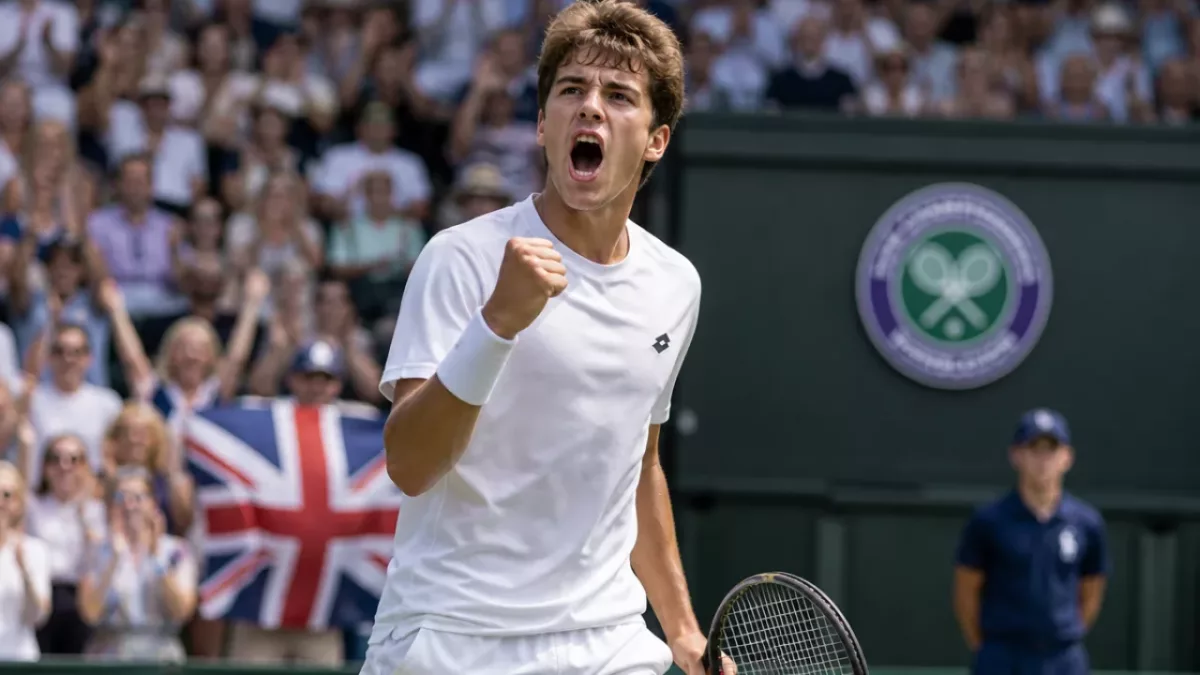
Facing Japan‘s seasoned competitor Taro Daniel in his Grand Slam debut, the odds were stacked against the young Briton. The early stages of the match seemed to follow a familiar script, with the more experienced Daniel taking the first set. However, what unfolded next was a testament to Fery’s resilience and the tangible energy of the home crowd. Refusing to yield, Fery clawed his way back into the contest, engaging in a tense second-set tiebreak that would prove to be the turning point. Clinching the tiebreak, he seized the momentum and never looked back, storming through the next two sets to seal a remarkable victory. This win was not just a personal milestone; it was a jolt of electricity for British fans, a reason to believe when other local hopes had already been extinguished.
A David vs. Goliath Clash on Court One
Fery’s reward for his first-round heroics was a second-round showdown against the formidable world No. 3, Daniil Medvedev. It was a classic David versus Goliath encounter, pitting the local wildcard against one of the sport’s most dominant figures. Despite the vast difference in rankings and experience, Fery played with a courage that defied his status. He stood toe-to-toe with Medvedev, challenging the top seed with aggressive baseline play and a clear desire to entertain the captivated audience. Though Medvedev’s class ultimately shone through in a straight-sets victory, the 7-5, 6-4, 6-3 scoreline did not fully capture the spirit of Fery’s challenge. He pushed his opponent, created chances, and left the court to a standing ovation, having earned the respect of both the crowd and his esteemed adversary.
Statistical Deep Dive: Fery’s Wimbledon Campaign
A closer look at the numbers reveals the nature of Fery’s performances. His second-round match against a top-tier opponent highlighted his potential and areas for growth. While he was outmatched in some key areas, his ability to win a respectable percentage of points on his second serve against such a player was a notable positive.
Arthur Fery vs Daniil Medvedev – Second Round Match Statistics
| Statistic | Arthur Fery | Daniil Medvedev |
|---|---|---|
| Aces | 5 | 10 |
| Double Faults | 3 | 1 |
| First Serve % In | 61% | 64% |
| Win % on First Serve | 60% | 79% |
| Win % on Second Serve | 49% | 48% |
| Break Points Won | 1 of 2 (50%) | 4 of 8 (50%) |
| Total Points Won | 77 | 104 |
Statistics sourced from TNT Sports.
The Local Lad with Wimbledon in His Blood
Arthur Fery’s connection to the All England Club runs deeper than most. He grew up in Wimbledon, just a stone’s throw from the tournament grounds. Tennis is part of his family’s DNA; his mother, Olivia Féry, was a professional player who competed in the French Open. His father, Loïc Féry, is a successful businessman and the owner of French football club FC Lorient. This unique blend of sporting heritage and local upbringing makes his Wimbledon journey all the more compelling. He attended King’s College School in Wimbledon and honed his skills in the very shadow of the institution he would one day compete in, making his story a genuine fairytale for the local community. Fery also developed his game at Stanford University, demonstrating a commitment to both athletics and academics before turning professional.
Mixed Fortunes for the British Contingent
Fery’s inspiring run came amidst a challenging tournament for many of his compatriots. The early rounds saw several British players bow out, heightening the focus on those who remained. In the ladies’ singles, Katie Swan also faced a tough first-round draw against the 14th seed, Belinda Bencic, ultimately falling in a hard-fought match. Her exit left the home crowd pinning even more of their hopes on the remaining players. Meanwhile, Jacob Fearnley made his major debut in the doubles event, where he and his partner reached the second round, a commendable achievement for the newcomer. The collective results painted a picture of a national tennis program in transition, with established names facing tough competition and emerging talents like Fery providing sparks of promise for the future.
What This Means for Fery and British Tennis
While a second-round exit may not seem monumental in the grand scheme of a Grand Slam, the impact of Arthur Fery’s performance transcends the win-loss column. For Fery, it was an invaluable experience, a chance to test his mettle against the world’s elite on the grandest stage. The prize money and ranking points provide a significant boost, but more importantly, the confidence gained from competing so capably will fuel his development. For British tennis, Fery’s emergence is a breath of fresh air. He represents a new generation of talent, and his spirited display has the potential to inspire younger players across the United Kingdom. His run, however brief, demonstrated that with the right combination of talent, hard work, and home support, British players can indeed make their mark at Wimbledon.