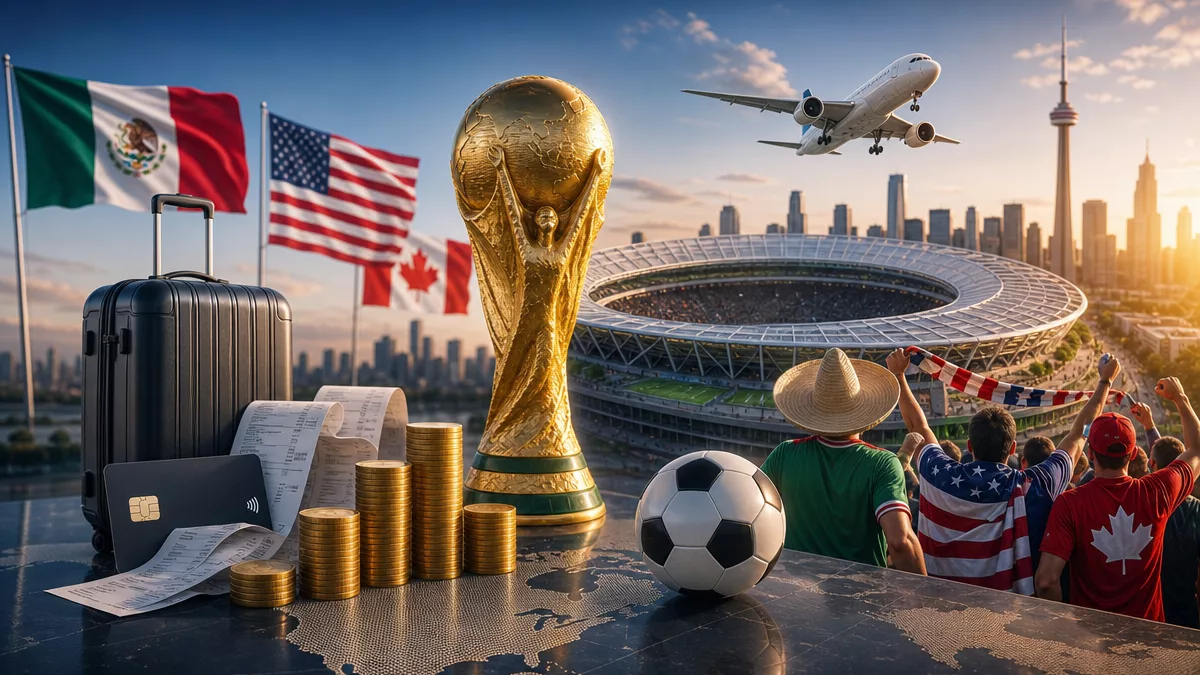
The Beautiful Game’s Beautifully Large Price Tag
The kickoff of the 2026 FIFA World Cup across the United States, Canada, and Mexico has been met with a mix of unbridled excitement and palpable financial apprehension from global football fans. This expanded 48-team tournament, the largest in history, has also brought with it the distinction of being the most expensive for supporters to attend. The sheer scale of the event, spanning 16 cities in three countries, presents a logistical and financial puzzle for even the most dedicated fans. From soaring ticket prices to fluctuating accommodation costs and vast travel distances between venues, the dream of following one‘s national team is rapidly becoming a significant financial undertaking. A trip to follow a team like England or the United States deep into the knockout rounds could easily venture into the tens of thousands of dollars, making meticulous budgeting more crucial than ever. The average cost to attend a single match in the U.S. is estimated at around $5,440 per person, a figure that includes a ticket, a two-night hotel stay, travel, and food.
Decoding the Dynamic Ticket Pricing Maze
For the first time in World Cup history, FIFA has implemented a dynamic pricing model, causing ticket prices to fluctuate based on demand, the teams playing, and the host city. This has led to a significant surge in costs compared to previous tournaments. For instance, the cheapest ticket for the 2026 final is approximately ten times more expensive than the most affordable seat at the 2022 final in Qatar. While FIFA did introduce a limited number of ‘Supporter Entry Tier’ tickets priced at a more accessible $60 for all 104 matches, these are distributed through national federations and are not available to the general public. The majority of fans are left to navigate a market where group stage matches can average between $350-$400 at starting prices, and knockout stage tickets escalate sharply from there. The controversy surrounding these high prices and the lack of transparency has even prompted investigations by the attorneys general of multiple U.S. states into FIFA’s ticketing practices.
The Accommodation Hurdle: A Tale of 16 Cities
Securing a place to stay without breaking the bank is another major challenge for fans. Hotel prices across the 16 host cities have seen dramatic increases, with some markets experiencing surges of over 300% compared to their usual rates. Vancouver has emerged as the most expensive city for hotels, with average nightly rates hitting an astounding $890, partly due to limited room availability and strict short-term rental laws. On the other end of the spectrum, Mexican cities like Monterrey, Guadalajara, and Mexico City offer the most budget-friendly options, with average nightly hotel costs being significantly lower than in their U.S. and Canadian counterparts. Among the U.S. host cities, Houston and Dallas have proven to be the most affordable for accommodation. Interestingly, a Rustic Pathways study found Kansas City to have the most expensive Airbnb listings, averaging $539.95 per night, while Guadalajara was the most affordable at just $89.06.
Cross-Country Travel: The Tri-Nation Trek
The unique three-country format of the 2026 World Cup means that following a team can involve traversing thousands of miles. This introduces a substantial travel cost that was less of a factor in previous, more geographically compact tournaments. Individual flights between host cities can cost anywhere from $300 to $500, and for a fan whose team makes a deep run, the total travel budget could easily escalate to between $1,800 and $3,500 per person. This logistical complexity adds another layer of financial planning for supporters, who must factor in not just the cost but also the time required to travel between far-flung venues like Vancouver, Mexico City, and Miami. The expanded tournament and the vast distances are key drivers behind the overall increased cost of attendance.
Daily Bread and Circuses: Budgeting for Everyday Expenses
Beyond the big-ticket items of flights, accommodation, and match tickets, the daily costs of food, local transportation, and merchandise can quickly add up. A SoFi analysis estimates that the average total cost of attending a match in a U.S. host city is approximately $5,440 per person, a figure that encompasses these ancillary expenses. There is, however, a significant disparity in the cost of living across the host cities. Boston and Philadelphia are projected to be the most expensive U.S. cities for a fan’s overall experience, with estimated total costs of $7,589 and $6,965 respectively. In contrast, cities in Mexico are considerably more economical, with daily expenses for food and transport being a fraction of what they are in the U.S. and Canada. For example, a street food meal in Mexico can cost as little as $2-5, compared to $12-18 in the United States.
The Economic Ripple Effect on Host Cities
The influx of millions of fans is providing a significant, if temporary, economic boost to the 16 host cities. Data from Bank of America has revealed a 6.3% year-over-year increase in overall card-based spending in these cities, driven by a remarkable 16.7% surge in spending by non-local visitors. This increased economic activity, flowing into hotels, restaurants, and entertainment venues, is creating jobs and generating tax revenue. Projections suggest that U.S. host cities could see an incremental economic impact of between $160 million and $620 million each. For example, Houston alone is projected to generate over $1.5 billion in economic activity from its seven matches. While the long-term economic benefits of hosting such mega-events are often debated, the immediate financial injection is a tangible positive for the host communities.
Fan Strategies for a Cost-Effective World Cup
Despite the daunting costs, savvy fans are employing a range of strategies to make their World Cup dreams a reality without succumbing to financial ruin. Opting for matches in more affordable host cities, particularly those in Mexico, is a primary cost-saving measure. Choosing cheaper seats, even if it means being further from the action, can also lead to significant savings. Many fans are also cutting costs by eating at less expensive local eateries or even preparing their own food when possible, avoiding the notoriously high prices at stadium concession stands. Utilizing public transportation instead of relying on expensive parking or rideshare services is another effective way to keep the budget in check. For some, the experience is being made more affordable by sharing accommodation costs with friends or connecting with other fans through social media groups to find shared lodging and transport.
Navigating the Challenges Beyond the Pitch
Attending the 2026 World Cup comes with a set of challenges that extend beyond just the financial. The sheer scale of the event across a vast continent presents unprecedented logistical and security hurdles. Fans must also be wary of potential scams, including counterfeit tickets and merchandise, which are common at events of this magnitude. Furthermore, some fans have faced difficulties with U.S. immigration and visa policies, which have impacted travelers from several of the participating nations. Concerns have also been raised about safety in and around fan zones and the potential for human trafficking. For those attending matches in hotter climates like Miami or Houston, heat illness is a serious health risk, and fans are advised to stay hydrated and be aware of cooling stations.
The Enduring Allure of the World’s Biggest Stage
Despite the significant financial and logistical hurdles, the allure of the FIFA World Cup remains as strong as ever. For millions of fans, the opportunity to witness their national teams compete on the world’s biggest stage is a once-in-a-lifetime experience. The vibrant atmosphere, the shared passion with fans from across the globe, and the potential for unforgettable moments of sporting drama are powerful draws. The tournament serves as a powerful unifying force, bringing people from diverse backgrounds together in a celebration of the beautiful game. While the 2026 edition may be the most expensive and complex World Cup to date, for those who make the journey, the memories and experiences will undoubtedly be priceless. The event is a testament to the enduring global appeal of football and its unique ability to captivate and unite people on a truly global scale.