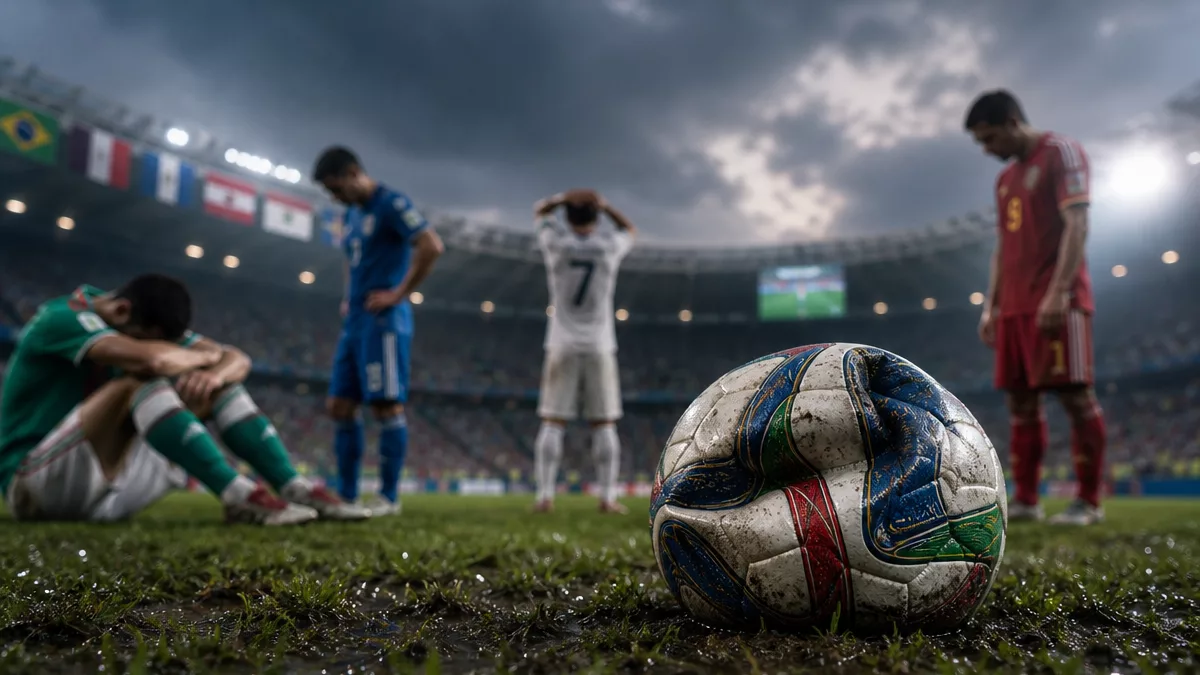
The 2026 FIFA World Cup‘s expanded group stage promised more drama, more excitement, and more opportunities for teams to etch their names in history. While many have seized the moment, the initial 72-match marathon has also produced a landscape littered with shattered expectations and premature departures. As the tournament pivots to the high-stakes drama of the knockout rounds, we dissect the campaigns of the teams that packed their bags early, leaving their fans and the footballing world to wonder what went so wrong. From fallen giants to underwhelming dark horses, these are the stories of the biggest disappointments from the group stage.
Uruguay‘s Unceremonious Exit
Two-time world champions Uruguay arrived in North America with a squad brimming with talent, a blend of seasoned veterans and exciting young prospects. Led by the tactical mind of Marcelo Bielsa, many anticipated a deep run from the South American powerhouse. However, what transpired in Group H was nothing short of a disaster. La Celeste failed to secure a single victory, crashing out of the tournament with a whimper. Their campaign was a frustrating tale of missed opportunities and an inability to convert possession into meaningful results. A stunning 1-0 defeat to Spain in their final group match sealed their fate, leaving them in third place with a meager two points. The draws against Saudi Arabia and Cape Verde, teams they were heavily favored to beat, will undoubtedly haunt them. The early exit marks a significant step back for a nation with such a rich World Cup history and raises serious questions about the direction of the team under Bielsa.
| Date | Opponent | Result | Uruguay Goalscorers |
|---|---|---|---|
| June 15, 2026 | Saudi Arabia | 1-1 Draw | Maximiliano Araújo |
| June 21, 2026 | Cape Verde | 2-2 Draw | Not specified |
| June 26, 2026 | Spain | 0-1 Loss | N/A |
South Korea‘s Heartbreak
The hopes of a nation rested on the shoulders of Son Heung-min and his South Korean teammates. After a promising start to their Group A campaign with a 2-1 victory over the Czech Republic, the Taeguk Warriors stumbled. A narrow 1-0 loss to co-hosts Mexico was followed by a devastating 1-0 defeat to South Africa, a match where a draw would have likely seen them through to the round of 32. Finishing third in the group, their fate was left in the hands of results from other groups. Ultimately, the cards did not fall in their favor, and they were eliminated. For a team that has consistently been a strong representative for Asia on the world stage, this early exit is a bitter pill to swallow. The failure to advance from a manageable group will lead to a period of introspection for the South Korean football association.
The Fading Golden Generation of Belgium
For years, Belgium’s ‘Golden Generation’ has been touted as a perennial contender in major tournaments. While many of its stars are now in the twilight of their careers, the squad still boasts an impressive array of talent. However, their performance in Group G was a far cry from their third-place finish in 2018. The Red Devils looked lethargic and uninspired in their opening two matches, playing to a 1-1 draw with Egypt and a goalless draw with Iran. Their only goal in these two encounters came via an own goal. While a convincing 5-1 victory over New Zealand in their final match was enough to see them top the group, the unconvincing nature of their overall performance has done little to quell the feeling that this team is a shadow of its former self. The reliance on individual brilliance rather than a cohesive team strategy was evident, and they will need a significant improvement if they are to make a serious challenge in the knockout stages. The lackluster group stage performance has certainly tempered expectations for a team once considered a favorite.
| Date | Opponent | Result | Belgium Goalscorers |
|---|---|---|---|
| June 15, 2026 | Egypt | 1-1 Draw | Own Goal |
| June 21, 2026 | IR Iran | 0-0 Draw | N/A |
| June 27, 2026 | New Zealand | 5-1 Win | Leandro Trossard (2), Kevin De Bruyne, Romelu Lukaku, Alexis Saelemaekers |
Turkey‘s Turkish Delight Turns Sour
Hopes were high for Turkey heading into the 2026 World Cup. With a squad filled with exciting young talent and seasoned veterans, many had them pegged as a potential dark horse. However, their campaign in Group D was a complete and utter disappointment. They were eliminated after just two matches, suffering a 2-0 defeat to Australia and a 1-0 loss to Paraguay. Incredibly, they failed to score a single goal in these two games despite registering a staggering 62 shots. This statistic alone highlights a team that was bereft of clinical finishing and creativity in the final third. A 3-2 victory over the United States in their final group game was too little, too late. For a team that had ended a 24-year absence from the World Cup, their performance was a major letdown for their passionate supporters.
A Continental Disappointment: Asia’s Struggles
The expanded format of the 2026 World Cup was seen as a major opportunity for confederations like Asia to showcase their growing strength in world football. With a record nine teams representing the AFC, there was a sense of optimism. However, the group stage turned into a nightmare for the majority of the Asian contingent. A staggering seven out of the nine teams were eliminated, with only Japan and Australia managing to advance to the knockout rounds. This collective failure has raised serious questions about the gap in quality between Asia’s top teams and the rest of the world. Powerhouses like Iran and South Korea, along with the likes of Saudi Arabia, Qatar, Jordan, and Uzbekistan, all fell at the first hurdle. The reasons for this widespread underperformance are multifaceted, but it is clear that significant improvements are needed for Asian teams to compete consistently at the highest level.
What Lies Ahead for the Fallen?
For the teams that have been sent packing, the 2026 World Cup will be remembered as a tournament of what-ifs and what-could-have-beens. For nations with a proud footballing heritage like Uruguay, the post-mortem will be long and arduous. For a team like Turkey, the focus will be on nurturing their young talent and finding a way to translate their potential into results. The disappointing showing from the Asian teams should serve as a wake-up call for the entire confederation. The road to the 2030 World Cup begins now, and for these teams, it will be a journey of redemption and rebuilding.
The Knockout Stage Beckons
As the dust settles on a dramatic and often unpredictable group stage, the 32 teams that remain now turn their attention to the win-or-go-home reality of the knockout rounds. The disappointments of the group stage serve as a stark reminder of the fine margins that exist in international football. For the teams that have advanced, the lessons learned from the fallen giants will be invaluable. The 2026 World Cup has already delivered its fair share of surprises, and with the knockout bracket now set, the stage is prepared for even more unforgettable moments.