The Crossroads at Chase Center
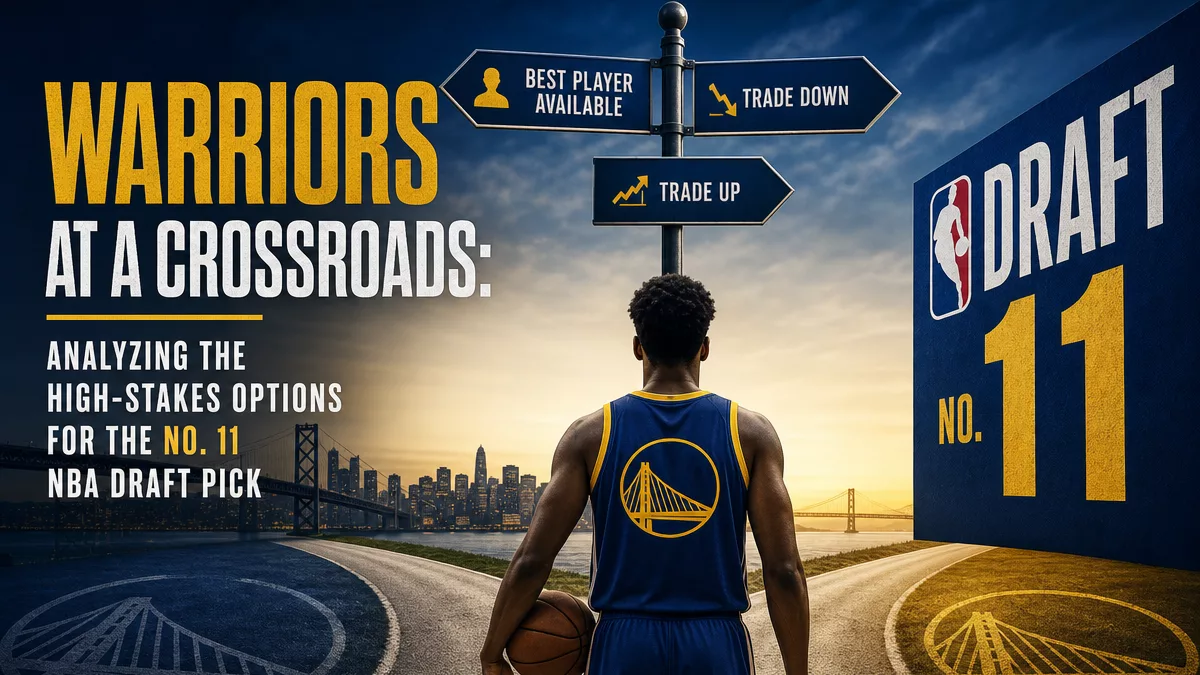
The Golden State Warriors enter the upcoming NBA draft at a pivotal moment in their franchise’s storied history. The dynasty’s core, while still formidable, is advancing in age, and the 2023-24 season’s conclusion in the Play-In Tournament was a stark reminder that the future is now. Armed with the No. 11 overall pick, General Manager Mike Dunleavy Jr. faces a decision that will ripple through the organization for years to come. The choice is not merely about acquiring young talent; it’s about defining the strategic direction for the twilight of Stephen Curry‘s prime and laying a new foundation for the next era of Warriors basketball. Will they opt for a player who can contribute immediately to extend their championship window, or will they swing for the fences on a high-potential prospect who could become a future star? This single pick is a balancing act between honoring the present and building a sustainable future.
Analyzing the Warriors’ Roster Deficiencies
A deep dive into the Warriors’ 2023-24 season reveals clear areas of need. The most glaring issue was a lack of consistent size and physicality in the frontcourt. Opposing teams often exploited their interior defense and rebounding weaknesses. While Draymond Green remains a defensive genius, he cannot single-handedly anchor the paint against the league’s dominant centers. Furthermore, the team is in need of wings with the size and versatility to defend multiple positions effectively. The offensive load on Stephen Curry remains immense, and finding a secondary offensive creator who can generate their own shot and alleviate that pressure is a top priority. With Klay Thompson’s future uncertain and the team facing significant salary cap constraints, the draft represents the most logical and cost-effective path to inject the roster with the size, defense, and shot creation it desperately needs.
A Look Back: The Warriors’ Recent Draft Record
To understand the current front office’s potential strategy, one must examine their recent draft history, which has been a mixed bag of hits and misses. The selection of James Wiseman with the second overall pick in 2020 serves as a cautionary tale about drafting for need and potential over proven production. Conversely, the team has found excellent value in later rounds, with Brandin Podziemski (19th pick in 2023) emerging as a key rotational piece and a fan favorite. The 2021 draft, which brought in Jonathan Kuminga and Moses Moody, has yielded developing players who have shown flashes of their potential but have yet to become consistent, high-impact contributors. This history showcases a front office capable of finding gems but also one that understands the high stakes of lottery selections. The pressure is on to avoid a repeat of the Wiseman scenario and find a player who can seamlessly integrate into Steve Kerr’s system and contribute meaningfully.
The Case for a Big Man: Donovan Clingan
If the Warriors decide to address their most immediate need, UConn’s Donovan Clingan is the obvious target. A towering 7-foot-2 center with a reported 7-foot-7 wingspan, Clingan is arguably the most dominant defensive force in this draft class. He was the anchor of a back-to-back national championship team, and his impact goes far beyond the box score. Clingan is a phenomenal rim protector, altering countless shots with his sheer size and excellent timing. Last season, he held opponents to just 0.492 points per possession on post-up plays, placing him in the 95th percentile in all of college basketball, according to Synergy Sports. Offensively, his game is simple but effective. He is an exceptional screener and a highly efficient finisher around the rim, scoring 1.39 points per possession at the basket. While he isn’t a floor spacer, his ability to control the paint, secure rebounds, and serve as a roll threat in the pick-and-roll would provide a dimension the Warriors have lacked for years. Pairing his defensive presence with Draymond Green’s acumen could create a truly formidable defensive frontcourt.
The ‘Win-Now’ Option: Dalton Knecht
For those who believe the priority should be maximizing what’s left of the Curry era, Tennessee’s Dalton Knecht presents a compelling case. A 23-year-old senior, Knecht is widely regarded as one of the most NBA-ready offensive players in the draft. The 6-foot-6 wing is an elite shooter with deep range, a skill that translates seamlessly to the Warriors’ offensive philosophy. He shot an impressive 40.5% from three-point range this past season and excelled in catch-and-shoot situations, where he ranked in the 89th percentile for points per possession. Knecht is more than just a spot-up shooter; he has shown an ability to create his own shot and is a smart off-ball cutter, a crucial skill in a motion-based offense. The primary concern with Knecht is his defensive capability. He isn’t known for his lateral quickness and can be a liability on that end of the floor. However, for a team that needs immediate offensive firepower and floor spacing, Knecht’s scoring prowess is hard to ignore. He represents a commitment to going all-in on the present.
The High-Potential Play: Ron Holland and Tidjane Salaun
If the Warriors are willing to invest in the future, two high-upside forwards, Ron Holland and Tidjane Salaun, could be in play. Holland, who spent last season with the G League Ignite, is a 6-foot-8 athletic wing with a relentless motor and tantalizing defensive potential. He led the Ignite in scoring (19.5 PPG) and steals (2.4 SPG), showcasing his two-way ability. While his offensive game, particularly his jump shot, is still raw, his athleticism and defensive versatility are precisely what modern NBA teams covet. Tidjane Salaun, from France, is an even younger and more raw prospect. At 6-foot-10, he possesses a rare combination of size, fluidity, and shooting potential for his position. He has shown flashes of being a dynamic floor spacer and versatile defender. However, at just 18 years old, he is considered a long-term project. Selecting either Holland or Salaun would be a bet on their considerable upside, requiring patience from the coaching staff and fanbase as they develop. This path prioritizes building the next great Warriors team, even if it means a smaller immediate impact.
Statistical Breakdown of the Top Prospects
To better understand the distinct skills each prospect brings, a look at their recent season statistics is essential. The numbers highlight the clear trade-offs between a defensive anchor, a polished scorer, and high-ceiling developmental wings.
| Player | Team | Points | Rebounds | Assists | Blocks | FG% | 3P% |
|---|---|---|---|---|---|---|---|
| Donovan Clingan | UConn | 13.0 | 7.4 | 1.5 | 2.5 | 63.9% | 25.0% |
| Dalton Knecht | Tennessee | 21.7 | 4.9 | 1.8 | 0.7 | 45.8% | 39.7% |
| Ron Holland | G League Ignite | 19.5 | 6.7 | 2.8 | 0.8 | 46.0% | 24.0% |
| Tidjane Salaun | Cholet Basket | 9.0 | 4.0 | 1.0 | 1.1 | 37.3% | 32.9% |
Statistics sourced from respective league and team official websites.
The Front Office’s Dilemma: Need vs. Best Player Available
Ultimately, the Warriors’ choice at No. 11 will reveal their core philosophy. The classic debate of drafting for need versus selecting the ‘best player available’ is very much alive for them. Taking Clingan would be a clear ‘need’ pick, addressing their most significant roster hole with a player whose role is clearly defined. This is often seen as the safer, more pragmatic approach. On the other hand, if they believe a player like Holland or even Knecht has a higher overall ceiling and could develop into a more valuable asset, they might eschew their positional need. This strategy is riskier but carries the potential for a greater reward. The front office’s evaluation of this specific draft class, which some analysts consider to be lacking in top-tier star power, will heavily influence their decision. It’s a calculated gamble with the future of the franchise hanging in the balance.
Final Verdict: Predicting the Warriors’ Selection
Considering all factors—the aging core, the glaring need for size, the financial constraints, and the desire to remain competitive—the most logical and impactful choice for the Golden State Warriors at No. 11 is Donovan Clingan. While the allure of a dynamic scorer like Knecht or a high-potential wing like Holland is strong, Clingan addresses a fundamental weakness that has plagued the team for several seasons. His immediate defensive impact would be transformative, providing a level of rim protection and interior presence they currently lack. His skills as a screener and efficient finisher would complement the offensive talents of Curry and the playmaking of Green perfectly. In a draft where sure things are hard to come by, Clingan’s defensive prowess is as close to a guarantee as one can find. His selection would be a clear, decisive step towards re-establishing the defensive identity that was the bedrock of their championship dynasty, while simultaneously fortifying the team for a deeper playoff run.