Dispelling the Rumors: Minnesota’s Backcourt Focus Lies Elsewhere
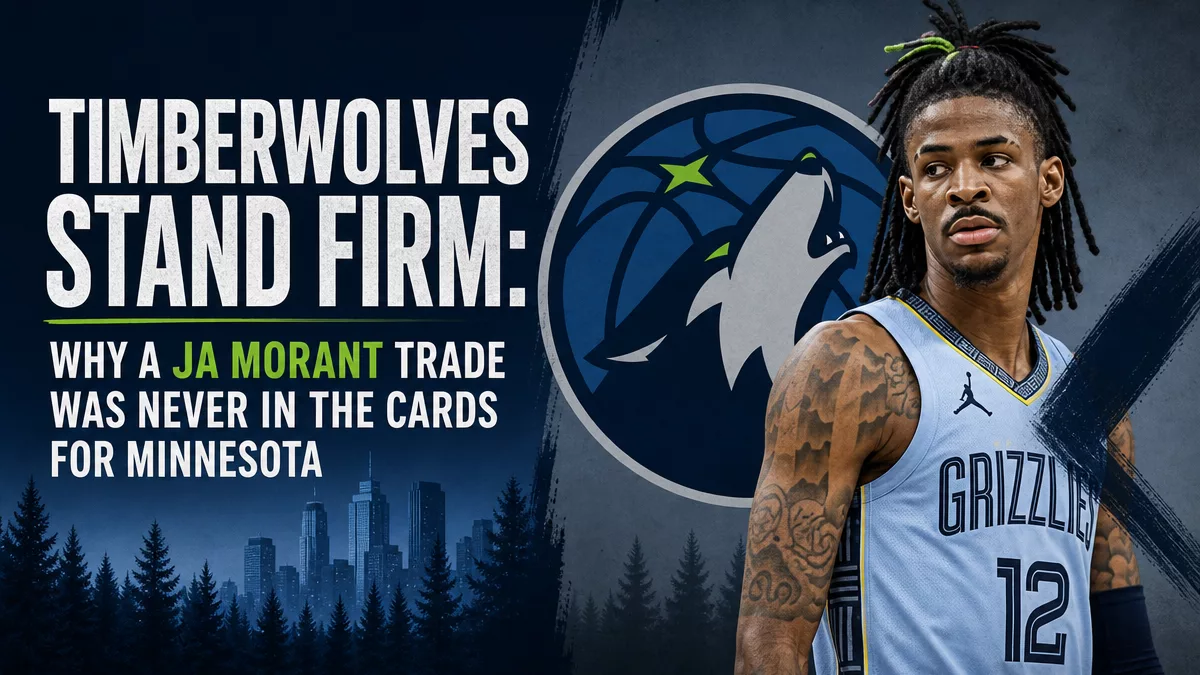
In the whirlwind of NBA offseason speculation, few names generate as much buzz as Ja Morant. The dynamic, albeit controversial, point guard for the Memphis Grizzlies has been the subject of numerous trade rumors, with several teams reportedly inquiring about his availability. For a time, the Minnesota Timberwolves were whispered to be among the interested parties. However, recent reports have definitively cooled those flames, indicating that Minnesota’s front office is, and has been, looking in a different direction to supplement their backcourt. According to Jon Krawczynski of The Athletic, the Timberwolves are not actively pursuing a trade for Morant and are exploring other options. This news aligns perfectly with the team’s recent moves and strategic philosophy, suggesting that the Morant-to-Minnesota narrative was always more smoke than fire.
The Financial Realities of a Morant Blockbuster
Any potential trade for a player of Morant’s stature begins and ends with the salary cap. Morant is currently in the midst of a five-year, $197 million designated rookie max extension signed in 2022. His cap hit escalates significantly each year, making any trade a complex financial puzzle. For the Timberwolves, who are building around the burgeoning superstar Anthony Edwards and have significant financial commitments to their core, absorbing Morant’s contract would be a monumental challenge. The recent trade of Julius Randle further complicates any theoretical salary matching, removing a key piece that could have been used in a larger deal. The financial gymnastics required to land Morant, without gutting the very depth that made them a contender, presents a barrier that the pragmatic Timberwolves front office, led by President of Basketball Operations Tim Connelly, seems unwilling to tackle.
A Culture of Stability: The Timberwolves’ Long-Term Vision
Tim Connelly has been deliberate in his construction of the current Timberwolves roster since taking the helm in May 2022. His tenure has been marked by bold moves, such as the trade for Rudy Gobert, but also by a clear desire to build a sustainable, winning culture. After a highly successful 2023-24 season that saw the team win 56 games and reach the Western Conference Finals for the first time in two decades, the emphasis is on continuity and internal growth. The team’s identity is forged on a league-best defense and the ascending talent of Anthony Edwards. Introducing a high-usage, ball-dominant player like Morant, who also comes with off-court questions, could potentially disrupt the established chemistry and on-court synergy that has been so crucial to Minnesota’s recent success. The team’s ethos under Connelly appears to be one of calculated risks, and a trade for Morant, given the circumstances, would represent a gamble that runs counter to their current trajectory.
The Mike Conley Factor: Veteran Leadership at the Helm
A significant piece of the puzzle that makes a Morant pursuit illogical for Minnesota is the presence of veteran point guard Mike Conley Jr. The 36-year-old floor general has been instrumental in the team’s transformation into a legitimate threat in the West. His calming presence, high basketball IQ, and efficient play have been a perfect complement to the explosive scoring of Edwards. Recognizing his immense value, the Timberwolves signed Conley to a two-year, $21 million contract extension in February 2024, keeping him with the team through the 2025-26 season. This move was a clear signal of the front office’s commitment to Conley as their starting point guard and leader, effectively closing the door on any blockbuster trades for another player at his position. Conley provides not just on-court production but invaluable mentorship for a young and developing roster.
Building Around Anthony Edwards: The Clear Franchise Cornerstone
There is no ambiguity in Minnesota: this is Anthony Edwards’ team. The former number one overall has blossomed into a bona fide superstar, a dynamic two-way force who has embraced the role of franchise leader. The entire organizational philosophy is geared towards maximizing his talent and building a championship contender around him. While the idea of pairing two electric athletes like Edwards and Morant is tantalizing on paper, the practical fit raises questions. Both players are at their best with the ball in their hands, and a potential pairing could lead to a ‘your-turn, my-turn’ offense that stifles the ball movement and team-oriented play that coach Chris Finch has instilled. The Timberwolves’ front office understands that the priority is to find pieces that complement Edwards, not necessarily replicate his skill set. The focus is on surrounding him with elite defenders, reliable shooters, and high-character veterans, a formula that proved highly effective in their deep playoff run.
Ja Morant’s Statistical Profile: A High-Risk, High-Reward Proposition
There is no denying Ja Morant’s immense talent. When on the court, he is one of the most explosive and entertaining players in the league. However, his availability has been a significant concern in recent seasons due to injuries and suspensions, limiting him to a combined 79 games over the past three seasons as of recent reports. Any team trading for him must weigh his incredible production against the risk of him not being on the floor. Below is a look at his per-game statistics from his last fully healthy season, which highlight his capabilities.
| Season | Team | GP | MPG | FG% | 3P% | RPG | APG | SPG | PPG |
|---|---|---|---|---|---|---|---|---|---|
| 2022-23 | MEM | 61 | 31.9 | .466 | .307 | 5.9 | 8.1 | 1.1 | 26.2 |
Statistics courtesy of NBA.com
Timberwolves’ 2023-24 Success: A Foundation to Build Upon
The 2023-24 season was a landmark year for the Minnesota Timberwolves. Their 56-26 record was one of the best in franchise history and they established themselves as a defensive juggernaut, finishing with the top defensive rating in the entire league. This success was not accidental; it was the culmination of strategic roster construction and the development of their core players. The team’s playoff run, which included a sweep of the Phoenix Suns and a thrilling seven-game series victory over the defending champion Denver Nuggets, solidified their status as a team on the rise. This strong performance provides the front office with a clear blueprint for the future: continue to build upon the foundation of defense, teamwork, and the superstar talent of Anthony Edwards. Making a drastic, high-risk trade for a player like Morant would be a deviation from the path that has already yielded such promising results.
| Statistic | Value | NBA Rank |
|---|---|---|
| Opponent Points Per Game | 106.5 | 1st |
| Defensive Rating | 109.0 | 1st |
| Net Rating | +6.6 | 3rd |
| Three-Point Pct | 38.7% | 3rd |
Statistics sourced from Basketball-Reference.com
What’s Next for the Timberwolves?
With the Ja Morant speculation put to rest, the question becomes: what is Minnesota’s next move? Tim Connelly and the front office have made it clear they are not complacent. They are actively canvassing the trade market for backcourt help, but the targets are likely to be players who are better stylistic fits and come with less financial and off-court risk than Morant. The goal will be to add another reliable ball-handler and shooter who can seamlessly integrate into the existing system, taking some of the offensive pressure off Anthony Edwards without disrupting the team’s defensive identity. The Timberwolves have positioned themselves as a formidable force in the Western Conference, and their offseason moves will be aimed at fine-tuning the roster for another deep playoff run, rather than a dramatic overhaul. The message from the Land of 10,000 Lakes is clear: they believe in their core and their culture, and they are committed to building a champion the Minnesota way.