The €60 Million Conundrum: Real Madrid’s Nico Paz Paradox
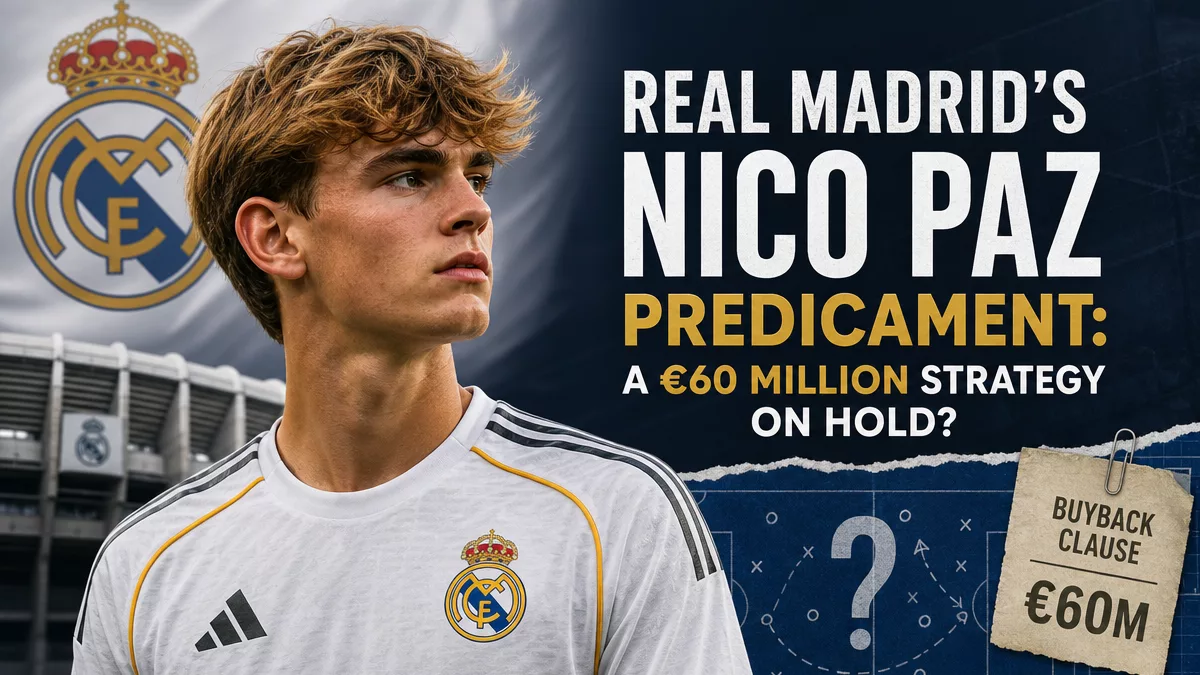
In the high-stakes world of European football, strategic asset management is as crucial as on-pitch tactics. Real Madrid, a club renowned for its financial acumen as much as its glittering trophy cabinet, finds itself at the center of a complex and fascinating transfer saga involving one of its most prized youth academy graduates, Nico Paz. The Argentine midfielder, currently plying his trade with remarkable success at Serie A surprise package Como, is the subject of a rumored €60 million masterstroke by the Madrid hierarchy. The plan, as reported by multiple outlets, is as audacious as it is lucrative: activate a modest buy-back clause to re-sign Paz, only to immediately place him on the transfer market with a staggering new price tag. However, what appears to be a straightforward financial gambit is proving to be anything but. A confluence of contractual complexities, shifting managerial philosophies, and the player’s own burgeoning ambitions has cast a significant shadow over this strategy. The question is no longer whether Madrid *can* execute this plan, but whether they *should*, and indeed, if they even will. The situation represents a fascinating paradox where financial opportunity clashes with sporting logic and player development, leaving the future of a potential superstar hanging in the balance.
The Making of a Maestro: Paz’s Italian Renaissance at Como
To understand why Nico Paz is valued so highly, one need only look at his transformative spell in Italy. Since joining the newly-promoted Serie A side Como in a €6 million deal in 2024, the 21-year-old has been nothing short of a revelation. Under the tutelage of manager Cesc Fàbregas, a midfielder of similar guile and vision, Paz has flourished, evolving from a promising youngster into a commanding playmaker. Deployed primarily as an attacking midfielder, his technical security, creativity, and eye for a decisive pass have been instrumental in Como’s impressive campaign, which has seen them qualify for the Champions League. Paz was named the Best Under-23 player in Serie A for the 2024-25 season, a testament to his impact where he registered six goals and nine assists. His performances have not only justified the initial hype but have far exceeded the expectations Madrid had when sanctioning his departure. He has become a cornerstone of the Como project and a fan favorite, demonstrating a maturity and consistency that belie his years. His ability to influence games at the highest level in Italy is the primary driver behind his soaring market value, which some reports suggest could even reach the €70-80 million mark.
His development is evident in the numbers he has been posting, showcasing a well-rounded and impactful presence on the pitch.
| Statistic (2025/2026 Season) | Value |
|---|---|
| Appearances (Serie A) | 35 |
| Goals | 12 |
| Assists | 6 |
| FotMob Rating (Average) | 7.67 |
| Shots Per 90 Mins | 3.77 |
| Shooting Accuracy | 39.67% |
Statistics sourced from FotMob and FootyStats.
A Web of Clauses: Deconstructing the Deal That Binds Paz to Madrid
Real Madrid’s foresight in structuring the deal for Nico Paz’s departure is the very foundation of this entire saga. While they sanctioned his sale to Como, they were careful not to relinquish full control over his future, embedding a series of clauses that now give them immense leverage. The most critical of these is a tiered buy-back option. Reports indicate that Madrid held a clause to re-sign him for around €9 million in the summer of 2026, which rises to €10 million for the summer of 2027. This pre-agreed fee is a fraction of his current open-market valuation. Furthermore, the deal reportedly includes a 50% sell-on clause, meaning Madrid would pocket half of any future transfer fee should Como sell him to another club. This intricate arrangement is a hallmark of Madrid’s strategy with its academy prospects, ensuring they either benefit from their development elsewhere or have a cost-effective route to bring them back. It is a win-win scenario for the Spanish giants, allowing them to either repatriate a developed star for a bargain price or reap a significant financial reward. This contractual power means the ball is firmly in Madrid’s court, a calculated move that is now set to pay dividends, one way or another.
The Mourinho Factor: A New Manager, A New Transfer Philosophy?
The potential return of Jose Mourinho to the Santiago Bernabéu has reportedly thrown a significant wrench into the works. While the club’s hierarchy may see the financial logic in the ‘buy-to-sell’ plan, a manager’s vision for his squad is paramount. Mourinho, known for his pragmatic approach and preference for physically imposing and tactically disciplined players, may not see the creative, mercurial Paz as a natural fit for his system. Historically, Mourinho has often favored established veterans over integrating young, developing talents into his starting lineups. If the Portuguese manager does not view Paz as a key component for his immediate plans, it makes little sporting sense to bring him back into the fold, even temporarily. This managerial shift could be the primary reason for the club’s change in thinking, from re-integrating Paz into the first team to viewing him purely as a financial asset. The club’s transfer strategy often aligns with the manager’s requests, and if Mourinho prioritizes reinforcements in other areas, the club may be more inclined to cash in on Paz to fund those moves. This change in the dugout significantly alters the landscape, making an immediate sale the most probable outcome if the buy-back is activated.
Financial Fair Play or Financial Firepower? Madrid’s Economic Landscape
There is no question that Real Madrid possesses the financial muscle to execute this plan. The club remains a global leader in revenue generation, reporting revenues of nearly €1.2 billion for the 2024-25 season, according to Deloitte’s Football Money League. Their sound financial position, with a low net debt and substantial cash reserves, means that the €9 or €10 million outlay for the buy-back clause is a trivial expense. From a purely business perspective, turning that investment into a €60 million sale represents an extraordinary profit margin. However, the move is not without its critics. Such a purely profit-driven transfer could be seen as a departure from the club’s ethos of developing and integrating its own ‘La Fábrica’ talents. It raises questions about whether the club is prioritizing its balance sheet over its sporting project. While the funds would undoubtedly be useful, Madrid is not a club in desperate need of cash. This has led to a debate among fans and pundits alike: is this shrewd business, or a shortsighted move that could see them lose a potential generational talent who should be wearing the famous white shirt?
The View from Lake Como: Cesc Fàbregas and the Fight to Keep Their Star
On the other side of this equation is Como, a club that has been thrust into the European spotlight thanks in no small part to Nico Paz. Manager Cesc Fàbregas has been vocal about his desire to keep his star player, who has been central to his tactical setup. The club is understandably desperate to retain the services of the Argentine, who they see as a cornerstone for their inaugural Champions League campaign. Reports suggest Como are exploring every possible avenue to keep him, from negotiating a new loan deal to trying to convince Madrid to let him stay for at least another season. They recognize that replacing a player of his caliber would be an almost impossible task. The synergy between Fàbregas and Paz has been a key factor in the player’s explosive development, and there is a strong argument to be made that another year under his guidance would be hugely beneficial for all parties. However, Como is ultimately at the mercy of the clauses in the contract and the financial might of Real Madrid. Their hope lies in convincing Madrid that the player’s continued development at Como—and a potentially even higher valuation in the future—is a more sensible long-term strategy than a quick sale.
A Gathering Storm: The Premier League and Serie A Suitors Watching Closely
Real Madrid and Como are not the only clubs with a vested interest in Nico Paz’s future. A host of Europe’s elite have been monitoring his progress with keen interest. Premier League giants Chelsea and Tottenham Hotspur, as well as Serie A rivals Inter Milan, have all been heavily linked with a move for the midfielder. This widespread interest is what underpins Madrid’s €60 million valuation. They are aware that a bidding war could easily erupt if Paz is officially placed on the market. Tottenham reportedly had a significant offer rejected in the summer of 2025, while Chelsea and Inter see him as a player who could transform their midfield. This external pressure complicates the situation. It validates the high price tag but also means Madrid cannot afford to hesitate. If they do decide to sell, they will likely want to do so quickly to capitalize on the current high level of interest. For the player, it provides a safety net of attractive alternative destinations should a return to Madrid not materialize. The presence of these powerful suitors ensures that, whatever happens, Nico Paz is likely to be one of the most talked-about names of the transfer window.
The Player’s Perspective: What Does Nico Paz Want?
Caught in the middle of this transfer tug-of-war is Nico Paz himself. Recent reports suggest that the player, who is currently with the Argentina squad for the World Cup, has expressed a desire to stay at Como for at least another season. His priority is guaranteed playing time, especially with a Champions League campaign on the horizon, which he sees as crucial for his continued development. The prospect of returning to Real Madrid, only to potentially be a rotational player behind established stars or sold on immediately, is reportedly not an appealing one. Sources close to Paz indicate he was initially excited about proving himself at the Bernabéu, but the shift in the club’s strategy has been a disappointment. He has thrived in the environment at Como, enjoying the trust of his manager and the adoration of the fans. His preference to remain in Italy, where he has a clear and defined role, could be a decisive factor. While Real Madrid holds the contractual power, forcing a player to return against his will can be counterproductive. This adds another layer of complexity to Madrid’s decision-making process.
Checkmate or Stalemate? The Inevitable Decision and Its Ripple Effects
Real Madrid stands at a crossroads, with the future of Nico Paz poised to create significant ripple effects across the European transfer market. The club holds all the cards, armed with a powerful buy-back clause and a strong financial position. The logical business move appears to be a quick re-signing followed by an immediate sale, banking a substantial profit that can be reinvested elsewhere. However, this path risks alienating a phenomenal young talent who has expressed a desire to continue his development in a stable environment. It also raises questions about the club’s commitment to its own academy products. Alternatively, allowing him to stay at Como or bringing him back to fight for a place in the squad could be a better long-term sporting investment, albeit one with less immediate financial gratification. The final decision will likely come down to the new manager’s vision and the club’s strategic priorities for the upcoming season. Whatever the outcome, the Nico Paz saga serves as a masterclass in modern football economics, where contracts are king, and the line between a sporting asset and a financial instrument is increasingly blurred.