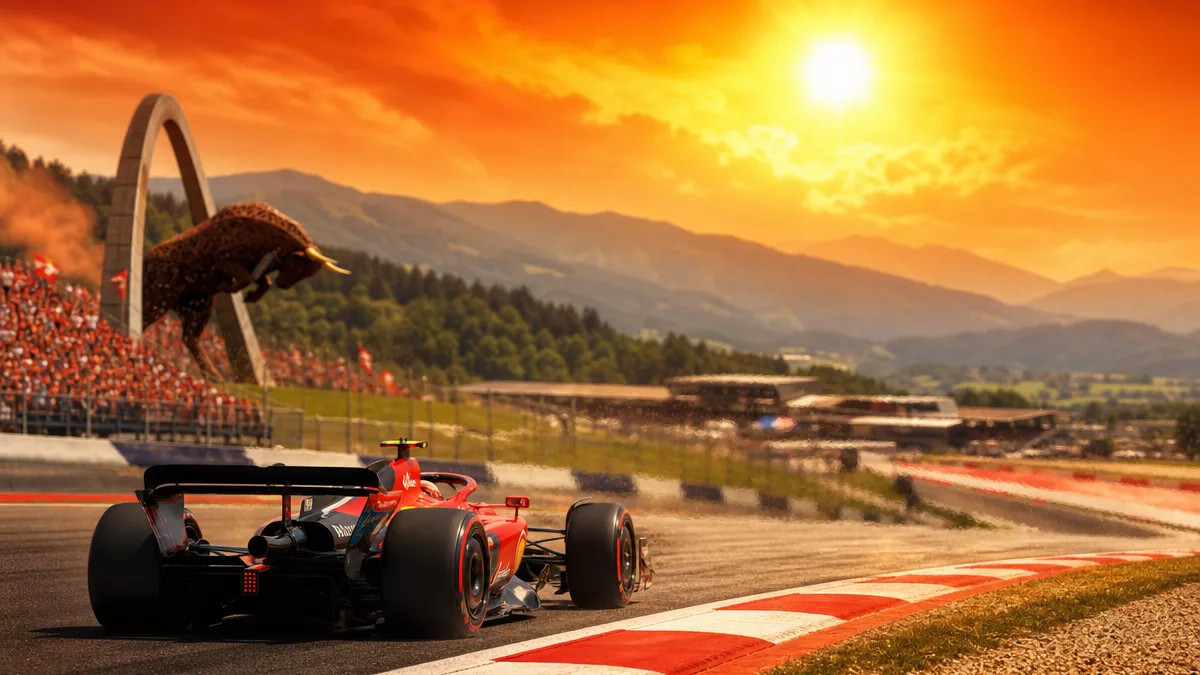
A Baptism of Fire in the Styrian Mountains
The picturesque Styrian mountains are set to trade their typically temperate summer climate for a scorching cauldron of heat this weekend, as the Formula 1 circus rolls into town for the highly anticipated Austrian Grand Prix. A severe European heatwave has descended upon the region, promising to turn the iconic Red Bull Ring into a grueling test of endurance for both man and machine. With the FIA officially declaring a ‘heat hazard’ for the race weekend, teams and drivers are bracing for a challenge that extends far beyond the usual strategic battles and on-track rivalries. The soaring temperatures will not only push the world’s elite drivers to their physical limits but also place immense strain on the sophisticated engineering marvels they pilot.
The Unseen Enemy: The Physical Toll on Drivers
While Formula 1 cars are designed to withstand incredible forces, the human body remains the most vulnerable component in the cockpit. In extreme heat, the cockpit of an F1 car can transform into a carbon-fiber oven, with temperatures soaring to between 50 and 60 degrees Celsius (122-140 degrees Fahrenheit). Under these punishing conditions, drivers can lose an astonishing 2-3 kilograms of body weight through sweat over the course of a two-hour race. This significant fluid loss can lead to severe dehydration, muscle fatigue, and a critical decline in cognitive function. Even a 2% reduction in body mass from dehydration can result in impaired physical and cognitive performance, which can manifest as missed braking points or poor decision-making in the crucial final stages of a race. To combat this, drivers rely on sophisticated in-helmet hydration systems, but as many have experienced, these are not always foolproof. The intense physical strain is further compounded by the high G-forces experienced during braking and cornering, which can reach up to 5-6 Gs at circuits like the Red Bull Ring.
When Machines Sweat: The Technical Challenge
It’s not just the drivers who will be feeling the heat in Austria; the cars themselves will be operating on a knife’s edge. High ambient temperatures have a cascading effect on a Formula 1 car’s performance. The dense, cool air that engines crave for optimal combustion is replaced by thin, hot air, which can lead to a reduction in power output. Furthermore, crucial components such as the engine, brakes, and electronics are all at risk of overheating. To counteract this, teams are forced to open up additional cooling vents on the car’s bodywork. However, this creates a significant aerodynamic compromise, reducing the car’s overall efficiency and downforce. The delicate balance between keeping the car cool and maintaining aerodynamic performance is a tightrope walk that can make or break a team’s weekend. The high altitude of the Red Bull Ring, situated approximately 700 meters above sea level, further complicates matters by reducing air density and thus the effectiveness of the car’s cooling systems.
Tires Under Torture: A Strategic Nightmare
The scorching track temperatures, which are expected to climb into the 50s Celsius, will have a profound impact on tire performance and race strategy. High temperatures accelerate the rate of tire degradation, causing the rubber to overheat and lose grip much faster than in cooler conditions. This phenomenon, known as thermal degradation, can lead to two major issues: blistering and graining. Blistering occurs when the rubber overheats, causing it to boil and create pockets of air that rupture the tire’s surface. Graining, on the other hand, is when the rubber becomes too cold and brittle, causing it to tear away from the tire. Both scenarios drastically reduce the contact patch between the tire and the track, leading to a significant loss of grip and unpredictable handling. Teams will need to be incredibly astute with their tire management, with the potential for more frequent pit stops and a wider range of strategic options coming into play.
Voices from the Paddock: Drivers Brace for the Heat
The impending heatwave has been a major topic of conversation in the Formula 1 paddock. While some drivers have expressed their concerns, others have adopted a more stoic approach. McLaren’s Oscar Piastri revealed his unique preparation method, which involved using portable heaters and an exercise bike in a small bathroom to acclimatize to the expected conditions. Red Bull’s Isack Hadjar acknowledged the discomfort of sitting on the starting grid in the heat but felt that the airflow while driving would provide some relief. However, he also expressed his reluctance to wear the optional cooling vest, finding it uncomfortable. The FIA’s ‘heat hazard’ declaration has made the use of a driver cooling system, including a liquid-cooled vest, an option for the drivers. Those who choose not to use it will have to carry extra ballast to ensure no competitive advantage is gained.
A Track of Contrasts: The Red Bull Ring’s Unique Challenge
The Red Bull Ring itself presents a unique set of challenges that will be amplified by the extreme heat. At just 4.326 kilometers, it is one of the shortest and fastest laps on the calendar, with only 10 corners. The circuit is characterized by significant elevation changes, with a steep uphill climb to Turn 3 followed by a flowing downhill section. The first sector, with its long straights, rewards raw power, while the latter half of the lap demands a well-balanced car with high-speed stability. The combination of heavy braking zones and high-speed corners will put immense stress on both the cars and the drivers, particularly in the sweltering conditions. The mountain climate is also known for its unpredictability, and while the forecast is for clear skies, a sudden change in weather is never out of the question.
Cooling Under Pressure: The Technological Arms Race
In the face of such extreme conditions, Formula 1 teams have developed a range of sophisticated cooling technologies. Modern F1 cars utilize a combination of air and liquid cooling systems to manage the immense heat generated by the power unit and other components. Radiators and heat exchangers are strategically placed within the car’s sidepods to maximize airflow and dissipate heat. Teams also employ a technique known as ‘rim heating’, where the heat from the brakes is transferred to the wheel rims to help keep the tires within their optimal operating temperature window. For the drivers, the primary defense against the heat is the specialized cooling vest, which circulates a chilled liquid through a network of tubes woven into the fabric. While effective, the system is not without its drawbacks, with some drivers finding it cumbersome and uncomfortable.
A Race Against the Thermometer
The Austrian Grand Prix is shaping up to be a true war of attrition, where the ability to manage the heat will be just as important as outright speed. The combination of the physically demanding Red Bull Ring and the punishing temperatures will push drivers and their machinery to the absolute limit. Teams that can find the optimal balance between cooling and aerodynamic performance, and drivers who can maintain their focus and physical conditioning in the face of extreme heat, will undoubtedly have a significant advantage. As the lights go out on Sunday, all eyes will be on who can best conquer the heat and emerge victorious from this trial by fire in the Austrian Alps.