Porziņģis and Warriors Solidify Partnership with New Extension
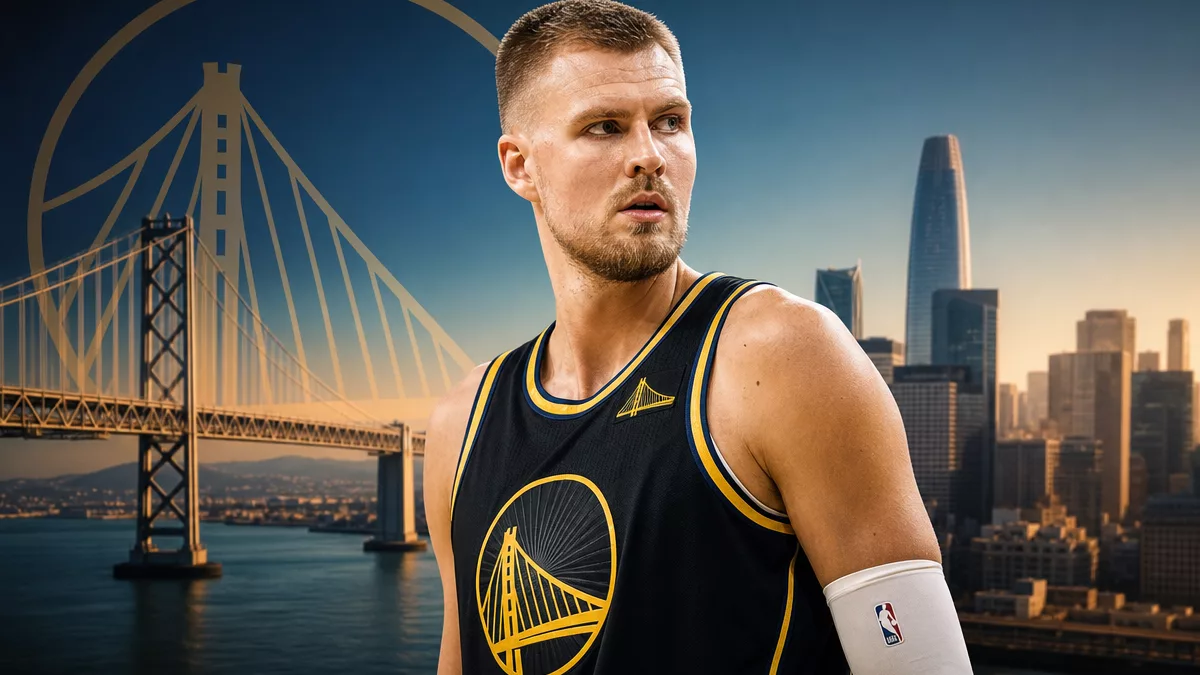
The Golden State Warriors have made a significant move to secure their frontcourt, reportedly agreeing to a two-year, $40 million contract extension with center Kristaps Porziņģis. The deal, confirmed by Porziņģis’s agent to ESPN, ensures the Latvian big man remains in the Bay Area through the 2027-28 season and includes a player option for the second year. This agreement signals a mutual commitment, providing the Warriors with a skilled center and Porziņģis with stability after a whirlwind season that saw him change teams mid-campaign. For a franchise at a crossroads, navigating the final years of its dynasty’s core, locking in a player of Porziņģis’s caliber is a clear statement of intent to continue competing at the highest level of the NBA.
A Mid-Season Arrival and a Glimpse of Potential
Porziņģis’s journey to this extension began just ahead of the February 2026 trade deadline, when the Warriors acquired him from the Atlanta Hawks in a deal that sent Jonathan Kuminga and Buddy Hield to Atlanta. The move was seen as a bold gamble by General Manager Mike Dunleavy Jr. to inject size and shooting into the lineup. In his limited 15-game run with Golden State, Porziņģis offered a compelling preview of his value. He averaged 16.1 points, 5.3 rebounds, and 1.1 blocks per contest, showcasing his ability to be a dynamic offensive threat. One of his standout performances came in a crucial play-in tournament victory over the Los Angeles Clippers, where he tallied 20 points on efficient 8-of-12 shooting, along with five rebounds and five assists. It was this glimpse of a high-ceiling player that undoubtedly fueled the organization’s confidence in extending a multi-year offer.
The All-Important Question of Availability
While the talent is undeniable, the primary concern surrounding Porziņģis has consistently been his health. His brief tenure with the Warriors was no exception, as he appeared in just 15 of a possible 27 games following the trade. The season ended on a low note as a right ankle injury hobbled him during the Warriors’ final play-in game against the Phoenix Suns, where he was limited to under 15 minutes in a season-ending loss. Beyond acute injuries, Porziņģis has also managed a diagnosis of postural orthostatic tachycardia syndrome (POTS) since the 2024-25 season with the Boston Celtics, a condition that requires ongoing management. The Warriors’ medical and performance staff, led by Rick Celebrini, will face the critical task of managing his workload to maximize his on-court availability. This two-year commitment is as much a bet on their ability to keep him healthy as it is on his talent itself.
The ‘Unicorn’s’ Fit in the Warriors’ System
When healthy, Porziņģis presents a unique matchup problem for opposing defenses, a quality that makes him an intriguing fit alongside a generational talent like Stephen Curry. At 7-foot-2, Porziņģis is a quintessential “stretch big,” capable of drawing opposing centers out of the paint with his career 36.4% shooting from three-point range, according to WHTC. This floor-spacing is invaluable in an offense predicated on Curry’s gravity and movement. Porziņģis’s presence can open up driving lanes for other players and create more space for the Warriors’ vaunted motion offense to operate. Defensively, he provides a shot-blocking presence at the rim that the team has often lacked. His integration with fellow veteran big man Al Horford, who also recently re-signed, and the potential return of defensive anchor Draymond Green, could form a versatile and high-IQ frontcourt rotation for head coach Steve Kerr.
Statistical Impact: A Tale of Two Teams in 2025-26
Porziņģis’s 2025-26 season was split between two distinct environments in Atlanta and Golden State. While his overall season averages were solid, a closer look reveals how his role and production shifted after the trade. His time with the Warriors saw a slight dip in rebounds, which can be attributed to playing in a different system and alongside different frontcourt partners. Below is a comparison of his performance with both clubs during the 2025-26 regular season.
| Team | Games Played | Points Per Game | Rebounds Per Game | Assists Per Game | Blocks Per Game | FG% |
|---|---|---|---|---|---|---|
| Atlanta Hawks | 17 | 17.1 | 5.1 | 2.7 | 1.3 | 45.7% |
| Golden State Warriors | 15 | 16.1 | 5.3 | 2.3 | 1.1 | 43.3% |
| Total / Average | 32 | 16.7 | 5.2 | 2.5 | 1.2 | 44.6% |
Statistics sourced from StatMuse and FanDuel Sportsbook.
Navigating a Complicated Salary Cap Picture
This extension significantly impacts the Warriors’ financial flexibility heading into NBA free agency. With Porziņģis’s new deal on the books, Golden State’s payroll tightens considerably. According to ESPN salary cap expert Bobby Marks, the signing likely restricts the Warriors from using the full $15 million non-taxpayer mid-level exception (NTMLE), a key tool for acquiring high-level talent. The Warriors now project to be approximately $24.4 million under the luxury tax and $32.5 million below the first apron, but this calculation does not include a potential new contract for Draymond Green. Green recently declined his $27.7 million player option, adding another layer of complexity to the team’s offseason financial planning. General Manager Mike Dunleavy Jr. must now perform a delicate balancing act to retain key players and improve the roster while navigating the league’s restrictive collective bargaining agreement.
The Broader Offseason Puzzle in the Bay Area
The Porziņģis extension is just one piece of a much larger and more ambitious offseason puzzle for the Warriors. It follows the team’s re-signing of veteran Al Horford to a two-year, $14 million contract, securing two key frontcourt players. However, the biggest headlines have been dominated by Draymond Green’s decision to enter free agency and the persistent rumors linking the Warriors to a bold pursuit of both LeBron James and Anthony Davis. While the Porziņģis deal makes the financial logistics of such a blockbuster scenario more challenging, it does not entirely eliminate the possibility. It does, however, increase the pressure on the front office to make shrewd moves, which could potentially involve trading other salaried players like Moses Moody to create the necessary cap space for such a monumental roster overhaul. The commitment to Porziņģis clarifies one part of the roster while the team’s ultimate direction remains a subject of intense speculation.
Looking Ahead: High-Risk, High-Reward for Golden State
Ultimately, the decision to extend Kristaps Porziņģis is a calculated, high-risk, high-reward investment for the Golden State Warriors. The organization is betting that his unique offensive skillset and defensive presence are worth the significant risk associated with his injury history. If Porziņģis can stay on the court, he provides the Warriors with a dimension they have been missing, a legitimate 7-foot-plus weapon who can score from all three levels and protect the rim. This move, coupled with their other offseason maneuvers, underscores a clear strategy: to maximize what remains of Stephen Curry’s championship window. The path forward is fraught with challenges, from navigating a tight salary cap to managing the health of a key player, but the Warriors have chosen to be aggressive, betting on elite talent to keep their championship aspirations alive in a highly competitive Western Conference.