A Pivotal Day in the Knockout Stage
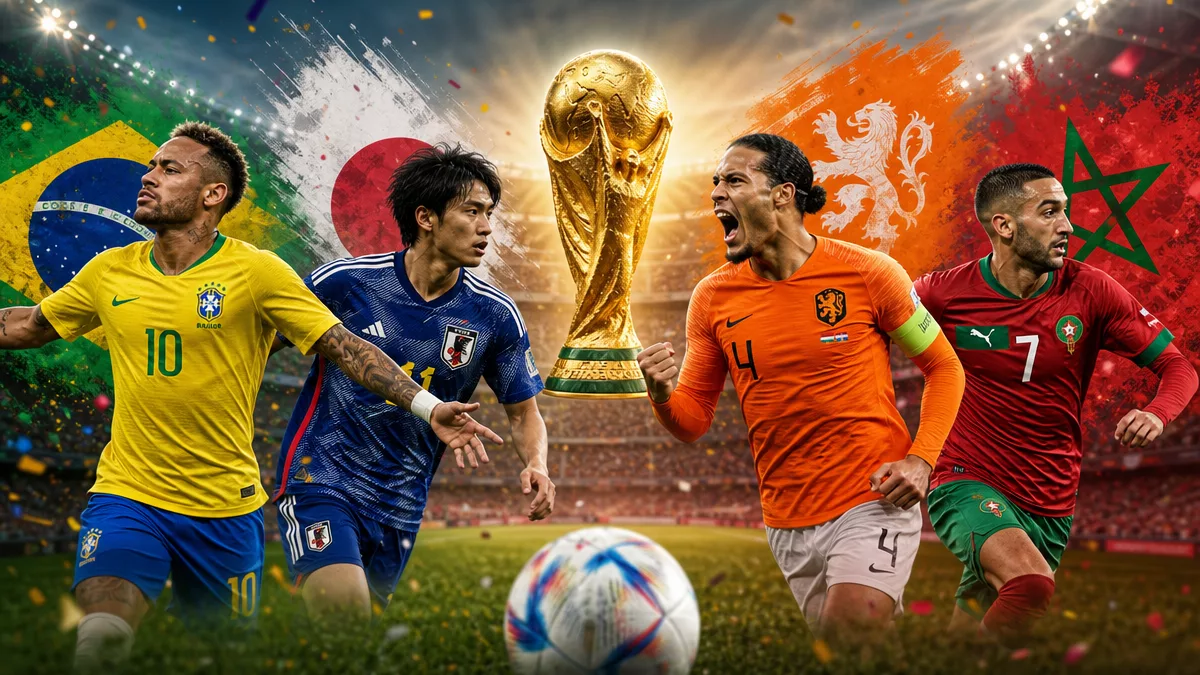
The 2026 FIFA World Cup has reached a fever pitch as the knockout rounds continue to deliver high-stakes drama. Day 19 presents two tantalizing matchups, each with its own unique narrative and tactical intrigue. In one corner, the five-time world champions, Brazil, are set to clash with a technically gifted and tactically flexible Japanese side. In the other, a rejuvenated Netherlands squad will test their mettle against the history-making Atlas Lions of Morocco. These matches are more than just a battle for a place in the quarterfinals; they are a collision of footballing philosophies and a testament to the global appeal of the beautiful game. The stakes are incredibly high, and for two of these proud nations, the dream of World Cup glory will come to an end.
Brazil vs. Japan: A History of Dominance and a Recent Warning
The historical record between Brazil and Japan heavily favors the South American giants. In their 14 previous encounters, Brazil has emerged victorious 11 times, with two matches ending in a draw. Their sole meeting at a World Cup came in the group stage of the 2006 tournament, where Brazil romped to a 4-1 victory, with Ronaldo Nazario scoring a brace. However, Japan’s solitary win against the Seleção came in their most recent meeting, a 3-2 friendly victory in October 2025. That result serves as a stark reminder that the Samurai Blue are more than capable of springing a surprise and will not be intimidated by their illustrious opponents. This encounter in Houston promises a fascinating clash of styles, pitting Brazil’s attacking prowess against Japan’s disciplined and organized approach.
| Metric | Brazil | Japan |
|---|---|---|
| Wins | 11 | 1 |
| Draws | 2 | |
| Goals Scored | 37 | 8 |
| Previous World Cup Meeting | Brazil 4-1 Japan (2006) | |
The Ancelotti Effect: Brazil’s Tactical Renaissance
Under the guidance of legendary Italian tactician Carlo Ancelotti, Brazil has undergone a tactical evolution. While the iconic ‘Joga Bonito’ remains at the heart of their identity, Ancelotti has instilled a greater sense of balance and defensive solidity. The Seleção have often lined up in a 4-2-3-1 formation, which provides a solid defensive base while allowing their attacking talents to flourish. A key feature of Ancelotti’s system has been the high press, with Brazil winning the ball back in the opponent’s half to devastating effect. This was evident in their convincing 3-0 group stage victory over Scotland, where the opening goals stemmed from this aggressive approach. The midfield duo of Casemiro and Bruno Guimarães provides a crucial screen for the defense, liberating the likes of Vinicius Jr. and Raphinha to wreak havoc in the final third. The return to fitness of Neymar adds another layer of intrigue, with Ancelotti suggesting the superstar could play a significant role, either from the start or off the bench. His experience and game-changing ability could be a decisive factor in a tight knockout encounter.
Moriyasu’s Masterclass: Japan’s Tactical Flexibility
Japan, under the astute leadership of Hajime Moriyasu, has earned a reputation as one of the most tactically versatile teams in the tournament. They have demonstrated the ability to seamlessly switch between a back-three and a back-four, adapting their approach to nullify the strengths of their opponents. Their progress to the knockout stage from a challenging Group F, which included a hard-fought 2-2 draw with the Netherlands, is a testament to their tactical acumen. Out of possession, Japan is incredibly organized, forming a compact defensive block that is difficult to break down. In attack, they are incisive and efficient, with the likes of Daichi Kamada and Ayase Ueda leading their charge. Their ability to transition quickly from defense to attack will be a key weapon against a Brazilian side that likes to commit players forward. Moriyasu’s side will likely cede possession to Brazil but will be confident in their ability to frustrate their opponents and hit them on the counter-attack.
Netherlands vs. Morocco: A Tightly Contested Rivalry
The rivalry between the Netherlands and Morocco has been infrequent but always fiercely contested. The two nations have met just three times previously, with the Dutch holding a slight edge with two victories to Morocco’s one. Their only previous World Cup encounter was in 1994, where the Netherlands secured a narrow 2-1 win. Morocco’s sole victory came in a 1999 friendly, but the most recent meeting in 2017 also ended in a 2-1 win for the Oranje. The fact that every match has been decided by a single goal speaks to the competitive nature of this fixture. As they prepare to lock horns in Monterrey, both teams will be acutely aware of the fine margins that could decide their World Cup fate.
| Metric | Netherlands | Morocco |
|---|---|---|
| Wins | 2 | 1 |
| Draws | 0 | |
| Goals Scored | 5 | 4 |
| Previous World Cup Meeting | Netherlands 2-1 Morocco (1994) | |
Koeman’s Oranje: A Blend of Pragmatism and Attacking Flair
Ronald Koeman’s Netherlands side has impressed in this tournament with a blend of tactical pragmatism and attacking flair. While they topped Group F, they have shown a willingness to adapt their system, often deploying a flexible 4-3-3 that can transition into a more solid 3-4-1-2 or 5-3-2 against tougher opposition. The defensive solidity provided by captain Virgil van Dijk is the bedrock of their team, while the midfield dynamism of Frenkie de Jong is crucial to their build-up play. In attack, they possess a wealth of talent, with Cody Gakpo and Memphis Depay providing a potent goal threat. Koeman’s tactical flexibility was on display in their 2-2 draw with Japan, where they had to dig deep to salvage a point. This resilience will be vital as they face a Moroccan side renowned for its defensive prowess.
The Atlas Lions: Building on a Historic Legacy
Morocco’s journey to the semi-finals of the 2022 World Cup was a historic achievement for African football, and they have carried that momentum into this tournament. Under new coach Mohamed Ouahbi, who took over from Walid Regragui, they have maintained their defensive discipline while evolving into a more possession-based side. Their qualification from Group C, where they secured a hard-fought 1-1 draw with Brazil, was a clear statement of their intent. The defensive spine of the team remains formidable, with Yassine Bounou in goal and the inspirational Achraf Hakimi leading the backline. In midfield, the creativity of Brahim Díaz has been a key asset, with the Real Madrid man providing two crucial assists in the group stage. Their compact 4-1-4-1 formation, with Sofyan Amrabat as the midfield anchor, is designed to frustrate opponents and launch swift counter-attacks. They will undoubtedly present a stern test for the Dutch attacking line.
Key Matchups to Watch
In the Brazil vs. Japan encounter, the duel between Brazilian winger Vinicius Jr. and Japanese fullback Takehiro Tomiyasu could be pivotal. Vinicius Jr.’s explosive pace and dribbling ability will test the defensive capabilities of the former Arsenal man. Similarly, the midfield battle between Brazil’s Casemiro and Japan’s Daichi Kamada will be crucial in dictating the tempo of the game. For the Netherlands and Morocco, the clash between Dutch forward Cody Gakpo and Moroccan right-back Achraf Hakimi promises to be a thrilling contest. Both players are integral to their team’s attacking play, and their head-to-head battle could have a significant impact on the outcome. The creative prowess of Morocco’s Brahim Díaz will also be a major concern for the Dutch defense, and how they contain his influence in the final third will be a key factor.
The Road to the Quarterfinals
As the dust settles on Day 19 of the 2026 FIFA World Cup, two teams will have punched their ticket to the quarterfinals, while two will be heading home. The clash between Brazil and Japan is a classic encounter of attack versus defense, while the Netherlands versus Morocco matchup is a more nuanced affair between two well-drilled and tactically astute sides. The winners will move one step closer to football’s ultimate prize, and the losers will be left to reflect on what might have been. The world will be watching as these four nations leave it all on the pitch in pursuit of glory.