A Champion’s Reward: The Unseen Investment
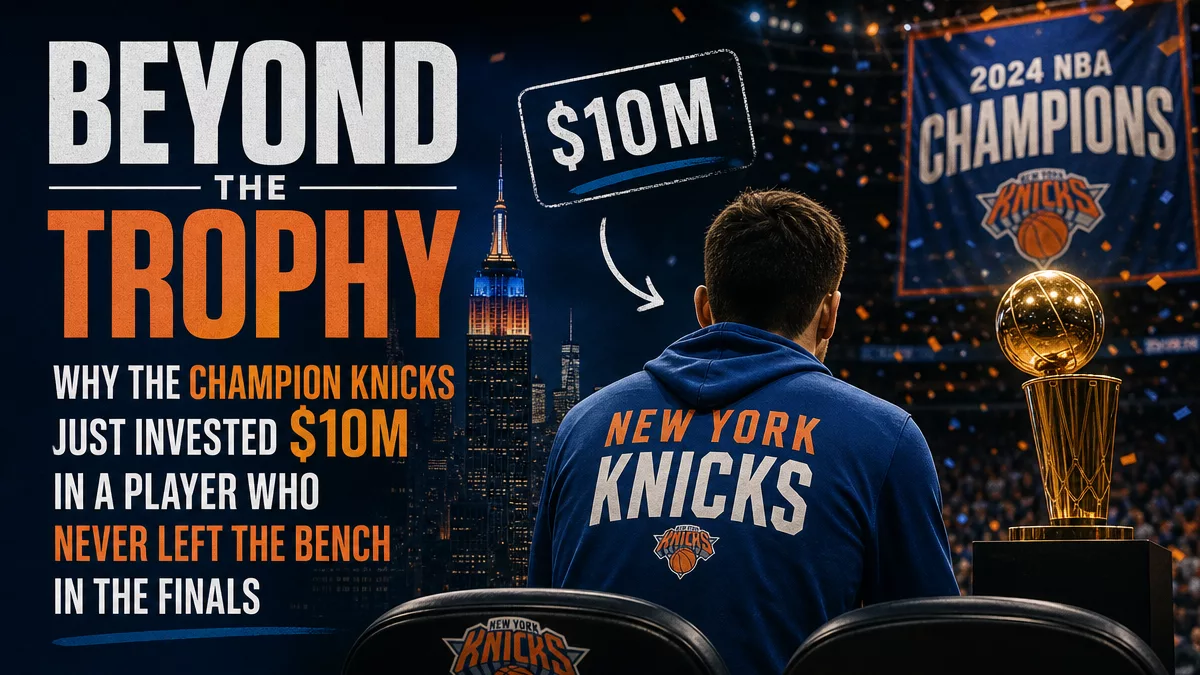
In the heart of a city still buzzing from its first NBA championship in over half a century, the New York Knicks are making moves that look beyond the immediate glory. While the confetti settles and the echoes of celebration from their victory over the San Antonio Spurs still resonate, the front office has executed its first significant act of the offseason. It wasn’t a blockbuster trade or a max extension for a superstar, but a multi-year deal worth over $10 million for a player who didn’t log a single second of playing time during the NBA Finals: rookie forward Mohamed Diawara. This decision, seemingly a quiet footnote to a historic season, offers a profound insight into the franchise’s new philosophy—a commitment to building a sustainable dynasty, not just basking in a single moment of triumph. It’s a calculated investment in potential, a signal that while the present is golden, the future is just as important.
The Road to Glory: A 53-Year Wait Ends
To understand the significance of any move the Knicks make this offseason, one must first appreciate the magnitude of their 2026 achievement. The franchise ended a 53-year championship drought, a painful stretch filled with fleeting hopes and prolonged despair. Led by first-year head coach Mike Brown, the Knicks exorcised the demons of seasons past, culminating in a dominant 4-1 series victory over a talented San Antonio Spurs team. The journey was anything but easy. The Knicks showcased remarkable resilience throughout the playoffs, famously overcoming double-digit deficits in all five Finals games. Their Game 4 performance, where they clawed back from a 29-point hole, will be etched in NBA lore as the greatest comeback in Finals history. This title was not just a win; it was a city-wide catharsis, delivered by a team that embodied the grit and tenacity of New York itself.
Jalen Brunson: The Heart of a Champion
At the epicenter of this historic run was Jalen Brunson, the undisputed leader and NBA Finals MVP. His performance was nothing short of legendary. Brunson averaged a staggering 32.6 points per game against the Spurs, cementing his status as one of the league’s elite superstars. When the lights were brightest, he shone with an intensity that overwhelmed every defense thrown his way. The defining moment of his career, and the series, came in the championship-clinching Game 5. On the road, with the weight of 53 years of franchise history on his shoulders, Brunson delivered a masterpiece, pouring in 45 points to secure the title. His effort was a mix of surgical precision and relentless will, a performance that not only earned him the Bill Russell Trophy but also a permanent place in the pantheon of Knicks legends. He became only the second Knick ever to win Finals MVP, joining the iconic Willis Reed.
The Pillars of the Franchise: Towns and Anunoby
While Brunson was the focal point, this championship was forged by a formidable supporting cast of stars. Karl-Anthony Towns, acquired in a landscape-altering trade, proved to be an indispensable force. Throughout the playoffs, he provided the crucial secondary scoring and frontcourt presence the Knicks needed to elevate to true contender status. In the first two games of the Finals, Towns was arguably the best player on the court, setting the tone for the series and demonstrating his value as a versatile big man. Now, securing his long-term future with a contract extension has become a top priority for the Knicks’ front office.
Equally vital was the two-way dominance of OG Anunoby. His defensive prowess is well-documented, but it was his offensive explosion in the Finals that left the basketball world in awe. Anunoby became a legend in New York with his performance in the historic Game 4 comeback, culminating in the game-winning tip-in with just over a second remaining. He joined Michael Jordan as one of only two players in Finals history to record a block or steal and hit a game-winning shot in the final 30 seconds of a game. His clutch play and consistent scoring were instrumental in turning the tide of the series.
| Player | Points Per Game | Rebounds Per Game | Assists Per Game |
|---|---|---|---|
| Jalen Brunson | 32.6 | 4.2 | 4.6 |
| OG Anunoby | 21.2 | 4.8 | N/A (Steals: 1.4) |
| Karl-Anthony Towns | 19.5 (through 2 games) | 12.5 (through 2 games) | 4.0 (through 2 games) |
Note: Statistics for Towns reflect his notable impact in the first two games as cited by sources.
Who is Mohamed Diawara?
Against this backdrop of superstar performances, the name Mohamed Diawara may seem out of place. The 51st in the 2025 NBA Draft, the French forward had a quiet rookie season, playing a limited role deep on the bench of a championship team. His season statistics do not jump off the page; he contributed when called upon, showing flashes of the potential that intrigued the front office. However, his value, as perceived by the Knicks, is not in what he did, but in what he can become. At just 21 years old, he is a raw but promising prospect with the modern NBA toolkit of size and potential floor-spacing ability. The Knicks organization sees a player who can be developed within their championship culture, a low-risk, high-reward asset who can grow into a valuable role player in the years to come.
| Games Played | Minutes Per Game | Points Per Game | Rebounds Per Game |
|---|---|---|---|
| 69 | 9.2 | 3.6 | 1.4 |
Source: Basketnews.com
Dissecting the Deal: More Than Just a Contract
The decision to invest over $10 million in Diawara is a masterclass in modern team-building. In an era of punitive luxury taxes and salary cap aprons, finding controllable, cost-effective talent is paramount to sustaining success. By signing Diawara to a multi-year deal, the Knicks are locking in a young player on a team-friendly contract before he has a chance to command a much larger salary on the open market. This move provides roster stability and financial flexibility. It demonstrates a forward-thinking approach that acknowledges the necessity of a talent pipeline. While superstars like Jalen Brunson and Karl-Anthony Towns carry the team now, developing players like Diawara ensures the team has the depth and assets to remain competitive for the long haul.
The Architect: Mike Brown’s Championship Vision
This strategic investment is a clear reflection of the culture instilled by Head Coach Mike Brown. In just his first season, Brown transformed the Knicks into a championship-caliber team, earning his first NBA title as a head coach. His hiring was met with some skepticism, but he quickly proved to be the perfect leader for this group, fostering a culture of accountability, resilience, and collective buy-in. Brown’s system empowers his stars while demanding excellence from every player on the roster. The Diawara signing aligns perfectly with this philosophy. It’s a message from the coaching staff and front office that every roster spot is valuable and that player development is a core tenet of the organization. Brown has built a reputation for getting the best out of his players, and the Knicks are he can mold Diawara into a key contributor for future NBA Playoffs campaigns.
A Glimpse into the Future: The Knicks’ Offseason Blueprint
Retaining Mohamed Diawara is the first step in a crucial offseason for the newly crowned champions. The primary objective is clear: keep the core intact. The front office is reportedly prioritizing a massive extension for Karl-Anthony Towns to ensure the team’s ‘Big Three’ of Brunson, Towns, and Anunoby remains the foundation for years to come. Navigating the complexities of the salary cap to retain key role players will be challenging, but the Diawara deal shows a commitment to smartly allocating resources. The Knicks are no longer a franchise hoping for a stroke of luck; they are a destination, an organization operating from a position of strength with a clear, strategic blueprint for sustained excellence. They are building a system designed not just to win again, but to compete for the NBA Finals trophy year after year.
The Verdict: A Calculated Gamble on Potential
In the final analysis, the New York Knicks‘ $10 million investment in Mohamed Diawara is far more significant than the numbers suggest. It’s a move that won’t grab headlines like the heroic playoff performances that preceded it, but it speaks volumes about the organization’s sharp new vision. This is not a sentimental reward for being part of a championship team. It is a cold, calculated on a future return. It is the action of a smart, confident front office that understands that the work of building a dynasty doesn’t stop when you lift the trophy. In fact, that’s when it truly begins. By investing in a player who watched the ultimate victory from the sidelines, the Knicks are making it clear they are already preparing for the championships of tomorrow.