A Generational Shift Arrives
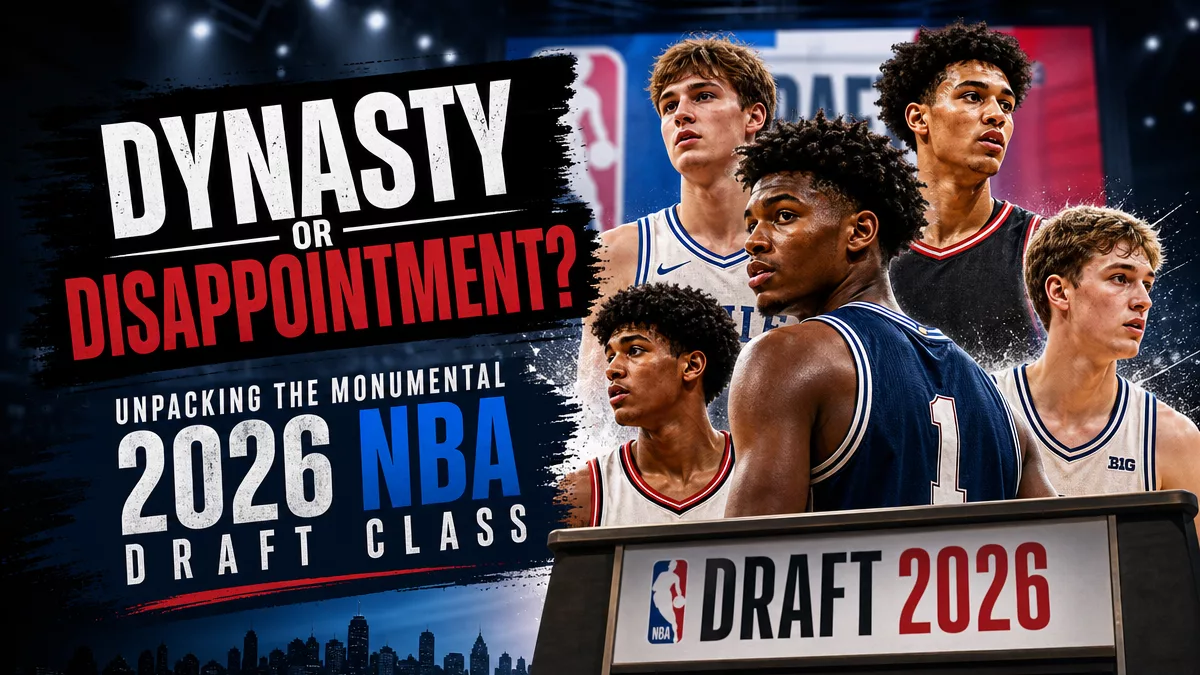
The night is over, the picks are in, and the basketball world is left to digest the reverberations of a truly seismic event. For years, the 2026 NBA Draft class was heralded as a beacon of hope, a collection of talent so deep and transformative it was whispered about in scouting circles with a kind of reverence. Now, as the confetti settles, the question shifts from potential to proof. Franchises have placed their bets, and the careers of prospects like AJ Dybantsa, Darryn Peterson, and Cameron Boozer have officially begun. This draft was more than just an injection of talent; it was a foundational moment, setting the course for league rivalries and championship aspirations for the next decade. The pressure is immense, but the promise is even greater.
The Chosen One: AJ Dybantsa Lands in Washington
There was a palpable sense of inevitability as Commissioner Adam Silver approached the podium to announce the first overall pick. As widely anticipated, the Washington Wizards selected Anicet “AJ” Dybantsa Jr., a forward from BYU whose talent is as immense as his 6-foot-9 frame. Dybantsa’s lone season in college basketball was nothing short of legendary; he led the entire nation in scoring, a feat that solidified his status as the consensus top prospect. His offensive arsenal is breathtakingly diverse, drawing comparisons to Kevin Durant for his ability to score from anywhere on the floor with fluid efficiency. During his freshman campaign with the BYU Cougars, Dybantsa was a statistical marvel, putting up numbers that demanded attention from every front office in the league.
Now, he joins a Wizards organization that is aggressively retooling for a return to contention. The recent blockbuster acquisitions of star point guard Trae Young and veteran big man Anthony Davis signal a clear win-now mentality in Washington. Dybantsa is not just a rookie; he is being positioned as the crown jewel of this ambitious rebuild, a young star to grow alongside established All-Stars. His ability to create his own shot and his significant defensive upside make him a tantalizing prospect for a team looking to make an immediate leap in the Eastern Conference standings.
The Elite Scorer: Darryn Peterson Brings His Talents to Utah
The debate over the top pick was a two-man race for much of the year, and with Dybantsa off the board, the Utah Jazz wasted no time in selecting Kansas guard Darryn Peterson second overall. Peterson is arguably the most gifted natural scorer in this draft class, a player who can fill up the stat sheet in a hurry. His freshman season at Kansas was a complex narrative; while he set the university’s freshman scoring record with an average of 20.2 points per game, he was also hampered by a series of injuries that limited him to just 24 games. These health concerns were a significant talking point in the pre-draft process, with some wondering if he might slide.
Ultimately, the Jazz bet on his immense talent, a decision that could pay massive dividends. When healthy, Peterson is a dynamic three-level scorer with a physical 6-foot-6 frame who can create for himself and others. In Utah, he projects to form a formidable young backcourt with last year’s lottery pick, Keyonte George. The Jazz are in the midst of a patient rebuild, and adding a potent offensive weapon like Peterson is a critical step in building a sustainable winner in the competitive Western Conference.
A Familial Legacy: Cameron Boozer Joins the Grizzlies
With the third pick, the Memphis Grizzlies selected a player with a championship pedigree in his blood: Duke forward Cameron Boozer. The son of two-time NBA All-Star Carlos Boozer, Cameron has been a dominant force at every level of the game. His season at Duke was spectacular, where he was named the consensus national player of the year after averaging 22.5 points across 38 starts. Boozer is a powerful and polished forward who combines his father’s strength with a modern skill set. He is a relentless rebounder, an efficient interior scorer, and a surprisingly adept passer for his position. The Grizzlies, a team known for its grit and toughness, will welcome a player of Boozer’s caliber and NBA-ready physique as they look to re-establish themselves as a playoff threat.
Rounding Out the Lottery: Power Forwards and Playmakers
The top-heavy nature of this draft was evident as the lottery picks continued to unfold, with a clear emphasis on versatile forwards. The Chicago Bulls grabbed North Carolina’s Caleb Wilson at number four, a 6-foot-10 forward who impressed with his scoring and rebounding prowess. Wilson’s freshman campaign saw him average nearly a double-double, showcasing a skill set that should translate well to the professional ranks. The lottery was flush with talent that could make an immediate impact for their new teams.
| Pick | Player | Position | College | NBA Team |
|---|---|---|---|---|
| 1 | AJ Dybantsa | SF | BYU | Washington Wizards |
| 2 | Darryn Peterson | SG | Kansas | Utah Jazz |
| 3 | Cameron Boozer | PF | Duke | Memphis Grizzlies |
| 4 | Caleb Wilson | PF | North Carolina | Chicago Bulls |
| 5 | Keaton Wagler | PG | Illinois | Los Angeles Clippers |
The Intriguing Case of Koa Peat
One of the more fascinating prospects in the draft was Arizona forward Koa Peat. Possessing an NBA-ready body at 6-foot-7 and a bulky 245 pounds, Peat is a physical specimen who plays with a high motor. His game is built on power and versatility, proving too strong for smaller defenders and too quick for traditional bigs. During Arizona’s run to the Final Four, Peat was a vital contributor, showcasing an impressive ability to finish at the rim with a 67% success rate on high volume. However, the biggest question mark surrounding his game is his outside shot. He attempted only 20 three-pointers during his freshman season, a statistic that gave some teams pause and led to his slide out of the lottery. For the team that selected him, the bet is on his undeniable physical tools, defensive impact, and developing skill set. If he can develop a consistent perimeter shot, he has the potential to be one of the biggest steals of this draft.
Weighing Risk and Reward
Every draft is an exercise in calculated risk, and the 2026 edition was no different. The primary narrative revolved around the elite talent at the top, but the underlying theme was the evaluation of risk versus reward. For a player like Darryn Peterson, teams had to weigh his undeniable scoring talent against the backdrop of an injury-disrupted freshman season. His assertion that he is fully healthy and “back, period” was likely a key factor in the Jazz’s decision to invest the second overall pick in him. Similarly, players like Koa Peat presented a different kind of gamble: a prospect with elite physical traits but a significant hole in his offensive game. The teams that navigate these complex evaluations successfully are often the ones that build championship contenders. This draft class is filled with players who have All-Star upside, but realizing that potential will require health, development, and the right situation.
A New Era Dawns
The 2026 NBA Draft will be remembered as a class that was loaded with franchise-altering talent at the top. The introductions of AJ Dybantsa, Darryn Peterson, and Cameron Boozer to the league will be watched with intense scrutiny from day one. They are not just rookies; they are seen as the potential faces of their respective franchises and, perhaps, the league itself. Beyond the top three, a deep pool of versatile forwards and dynamic guards have found new homes, each with the potential to carve out a significant role. The landscape of the NBA has shifted. The future has arrived, and it promises to be electrifying.