

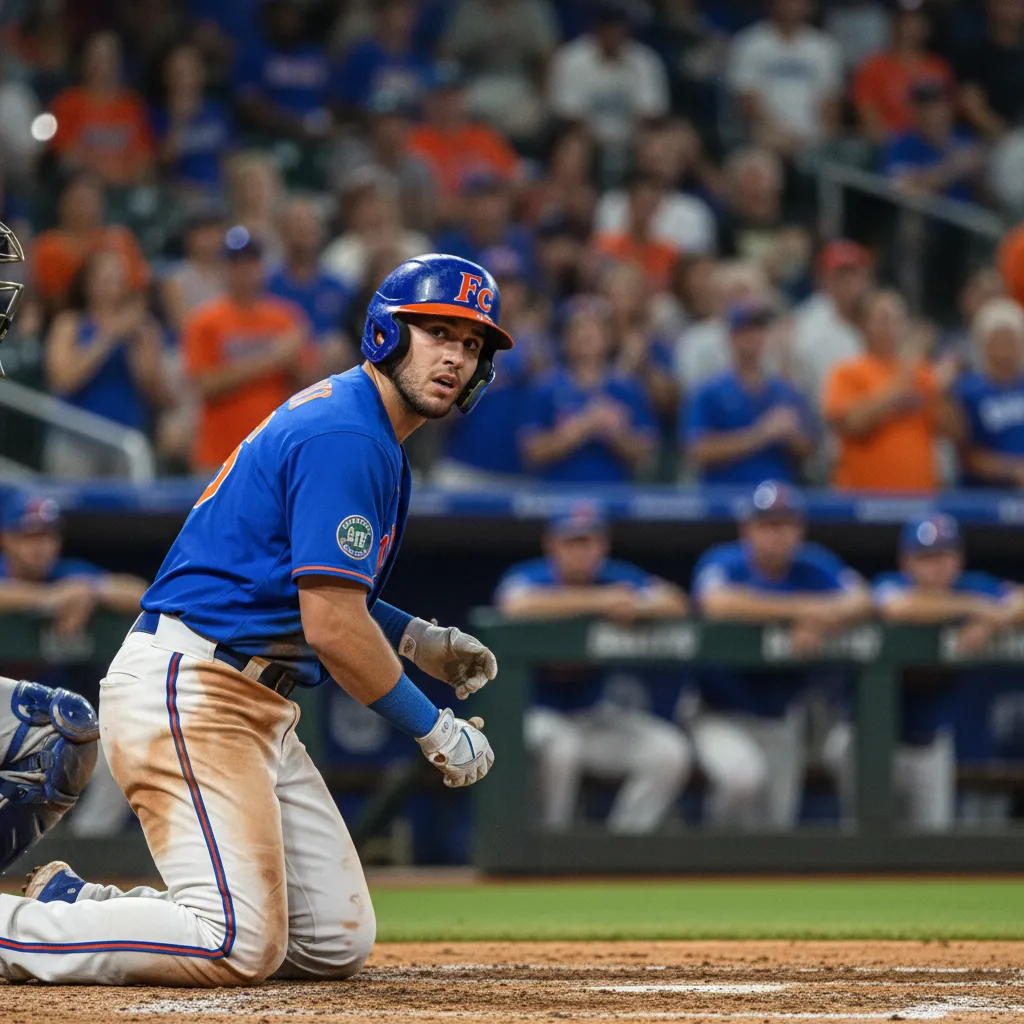
A New Era Dawns: Florida Baseball and the ABS Challenge
This week marks a significant moment for Florida baseball, not just as they step onto the diamond for the SEC Tournament, but as pioneers ushering in a new era of the game itself. The prestigious tournament is set to introduce a groundbreaking automated ball-strike (ABS) challenge system, a technological innovation poised to reshape the strategic landscape of collegiate baseball. For the Gators, this isn’t merely another series of games; it’s an immediate immersion into a future where technology intertwines with the age-old nuances of America’s pastime, demanding adaptability from the first pitch.
The anticipation surrounding the ABS challenge system is palpable. While automated strike zones have been trialed in various minor leagues and experimental settings, their full integration into a high-stakes collegiate tournament like the SEC Baseball Tournament represents a seismic shift. Coaches will now have a limited number of challenges to dispute umpire calls, potentially altering momentum and requiring an entirely new layer of in-game management. This system promises to bring a new dimension of fairness and precision, but also introduces a tactical chess match that teams like Florida must quickly master.
Florida’s approach to this technological leap will be under intense scrutiny. Head Coach Kevin O’Sullivan’s staff will undoubtedly have meticulously prepared their pitchers and hitters for scenarios involving the new system. Understanding when to challenge a call, how it impacts pitch sequencing, and the psychological effect on players will be crucial. It’s a testament to the evolving nature of sports that even the most fundamental aspects of baseball, like the ball-strike call, are now subject to digital review, pushing teams to innovate beyond traditional strategies. As ESPN has reported on previous ABS trials, the integration is often smoother than anticipated, but the strategic implications are profound.
Understanding the ABS Challenge System: Key Elements
The introduction of the ABS challenge system at such a critical juncture of the season for the Gators and their SEC rivals is a bold move. While specific parameters for challenges are typically detailed by the league, the general framework aims to enhance accuracy while preserving a human element. Here’s a look at the core aspects and implications of such a system:
| Aspect | Impact/Description |
|---|---|
| Challenge Limit | Teams typically receive a limited number of challenges per game to dispute ball/strike calls. |
| Umpire Role | Home plate umpire retains primary calling duties; ABS is used for review upon challenge. |
| Technology | Utilizes sophisticated camera and radar systems to track pitch trajectory and strike zone. |
| Strategic Depth | Adds a new layer of decision-making for coaches regarding when and whether to challenge. |
| Player Adjustment | Pitchers and hitters must adapt to potential changes in strike zone perception and call accuracy. |
For the Gators, adapting quickly will be paramount as they navigate the tournament bracket. Every pitch, every call, now carries an added layer of potential review. This could lead to more confident swings and pitches, knowing that egregious errors can be rectified. However, it also means coaches must be sharp, making quick, high-stakes decisions that could swing the outcome of a critical at-bat or even an entire game. The blend of human judgment and technological precision is truly what makes this year’s tournament unique.
Ultimately, Florida’s journey through the SEC Tournament will serve as a fascinating case study in sports evolution. The Gators are not just competing for a championship; they are actively shaping the future of baseball. Their performance, combined with their tactical approach to the ABS system, will be watched closely by fans, analysts, and other leagues considering similar innovations. This week promises to deliver not only thrilling baseball but also a glimpse into where the game is headed, with the Gators at the forefront of this exciting, technological frontier. More information on the team’s schedule and results can be found on the official Florida Gators Baseball website.
Navigating the Unknown: The Gators’ Strategic Mindset
The crack of the bat and the roar of the crowd are constants, but this week, the SEC Tournament introduces an unprecedented variable: the automated ball-strike (ABS) challenge system. For teams like the Florida Gators, it’s not just another rule change; it’s a fundamental shift in game management, demanding a sophisticated blend of preparation and real-time adaptation. As they head into the crucible of postseason play, Florida’s approach to this technological layer will be under intense scrutiny, potentially dictating crucial moments.
Head Coach Kevin O’Sullivan and his staff have undoubtedly spent countless hours dissecting the nuances of the ABS system. While the specific game-day blueprint remains a closely guarded secret, the overarching strategy will center on meticulous preparation. This isn’t merely about understanding the rules; it’s about anticipating how the system will impact pitching sequences, hitting approaches, and defensive alignments. Players will need to internalize when and how to signal for a challenge, understanding the precious few opportunities they’ll have to overturn a call.
The challenge system introduces a delicate balance between trusting human instinct and leveraging technological precision. A pitcher might feel a pitch was a strike, but the catcher’s immediate read, informed by scouting and real-time data, could prompt a challenge. Conversely, a batter might believe they were robbed of a walk. These micro-decisions, made under immense pressure, will be pivotal. The Gators’ success hinges on their ability to make timely and judicious challenge decisions, preventing wasted opportunities while maximizing their chances to correct perceived errors.
This new dynamic will undoubtedly alter the rhythm of the game. Potential stoppages for reviews could break a pitcher’s momentum or allow a hitter to reset. Maintaining focus amidst these shifts will be paramount. The coaching staff and players alike are tasked with integrating this technological layer seamlessly into their existing competitive framework, ensuring that the team’s core strengths — pitching dominance, timely hitting, and solid defense — remain paramount even as they adapt. The goal is to make the system an extension of their strategy, not a distraction.
Here’s a look at the key strategic pillars for the Gators in navigating the new ABS challenge system:
| Strategic Pillar | Description |
|---|---|
| Meticulous Preparation | Thorough study of ABS rules, challenge limits, and potential game impacts. |
| On-Field Adaptability | Players making real-time decisions, trusting instincts alongside data. |
| Judicious Challenge Decisions | Maximizing limited challenge opportunities to overturn critical calls. |
| Focus Amidst Rhythm Shifts | Maintaining concentration despite potential game stoppages for reviews. |
| Seamless Integration | Weaving ABS strategy into existing competitive framework without disruption. |
The SEC Tournament, known for its high stakes and intense competition, provides the perfect proving ground for this new technology. Fans can expect a fascinating chess match, not just between the teams on the field, but also between human judgment and technological arbitration. For more details on the tournament, visit the official SEC Baseball website. Understanding how the Automated Ball-Strike system works can be crucial for following the action, and a good overview can be found on MLB’s official glossary regarding its testing. The Florida Gators will aim to write the first chapter of their postseason story with precision, leveraging every tool at their disposal, including the unprecedented ABS challenge system.
High Stakes and High Tech: The Tournament Impact
As the Florida Gators prepare to step onto the diamond for the crucible of the SEC Tournament, the atmosphere is already thick with championship aspirations and the pressure that only postseason baseball can bring. Every pitch, every swing, every strategic decision carries immense weight. This year, however, an additional, fascinating layer of intrigue is woven into the fabric of the competition: the highly anticipated debut of the automated ball-strike (ABS) challenge system.
For Kevin O’Sullivan’s squad, this isn’t merely about executing fundamentals under pressure; it’s about mastering a new technological variable that could prove to be a decisive factor in their tournament aspirations. The Gators’ ability to adapt swiftly to this cutting-edge system, understand its nuances, and deploy their limited challenges judiciously will be as critical as their pitching rotation or their clutch hitting. This week isn’t just about winning games; it’s about pioneering a new frontier in collegiate baseball, and Florida finds itself positioned right at the heart of that exciting, uncertain journey, potentially setting a precedent for how future high-level baseball is played.
The introduction of the ABS challenge system marks a significant shift in the game’s mechanics, offering teams a limited number of opportunities to appeal an umpire’s ball or strike call to an automated system. This blend of human judgment and technological precision demands a refined strategic approach, forcing coaches and players alike to reconsider when and how to challenge. According to reports from the SEC, the system aims to enhance accuracy while still allowing for the human element of the game.
Navigating the New Frontier: Florida’s ABS Strategy
The Gators’ approach to this new system will undoubtedly be a topic of intense discussion. Will they lean on analytics to guide their challenges, or trust their catchers’ and batters’ instincts in the heat of the moment? The balance between preserving challenges for critical late-game situations and using them early to gain an advantage will be a delicate tightrope walk. Every team in the tournament faces this same learning curve, but the squads that adapt quickest stand to gain a significant edge.
This innovative trial in the SEC Tournament is part of a broader trend in baseball, with various leagues exploring how technology can be integrated into the game. Major League Baseball has been experimenting with ABS in the minor leagues for several seasons, showcasing the potential for improved accuracy and reduced controversy over calls. For Florida, understanding the specifics of the system—how many challenges are granted, what constitutes a successful challenge, and the precise mechanics of the review—will be paramount.
| Feature | Description / Impact on Gators |
|---|---|
| Automated Ball-Strike (ABS) | Primary calls made by human umpire; challenges reviewed by automated system. |
| Challenge Limit | Each team typically receives a set number of challenges per game (e.g., 2-3). |
| Strategic Use | Florida must judiciously decide when to challenge, balancing early advantage with late-game needs. |
| Player Adaptation | Batters and catchers need to quickly assess ball/strike calls for potential challenges. |
The tournament itself is already a proving ground for the nation’s top collegiate talent. Adding the ABS challenge system transforms it into a laboratory for the sport’s future. Florida’s players and coaching staff will be under the microscope, not just for their performance, but for their ability to integrate and master this new technological tool. Their success, or indeed their struggles, could very well influence the trajectory of ABS implementation across college baseball and beyond. The stakes are high, and the future is now.


