

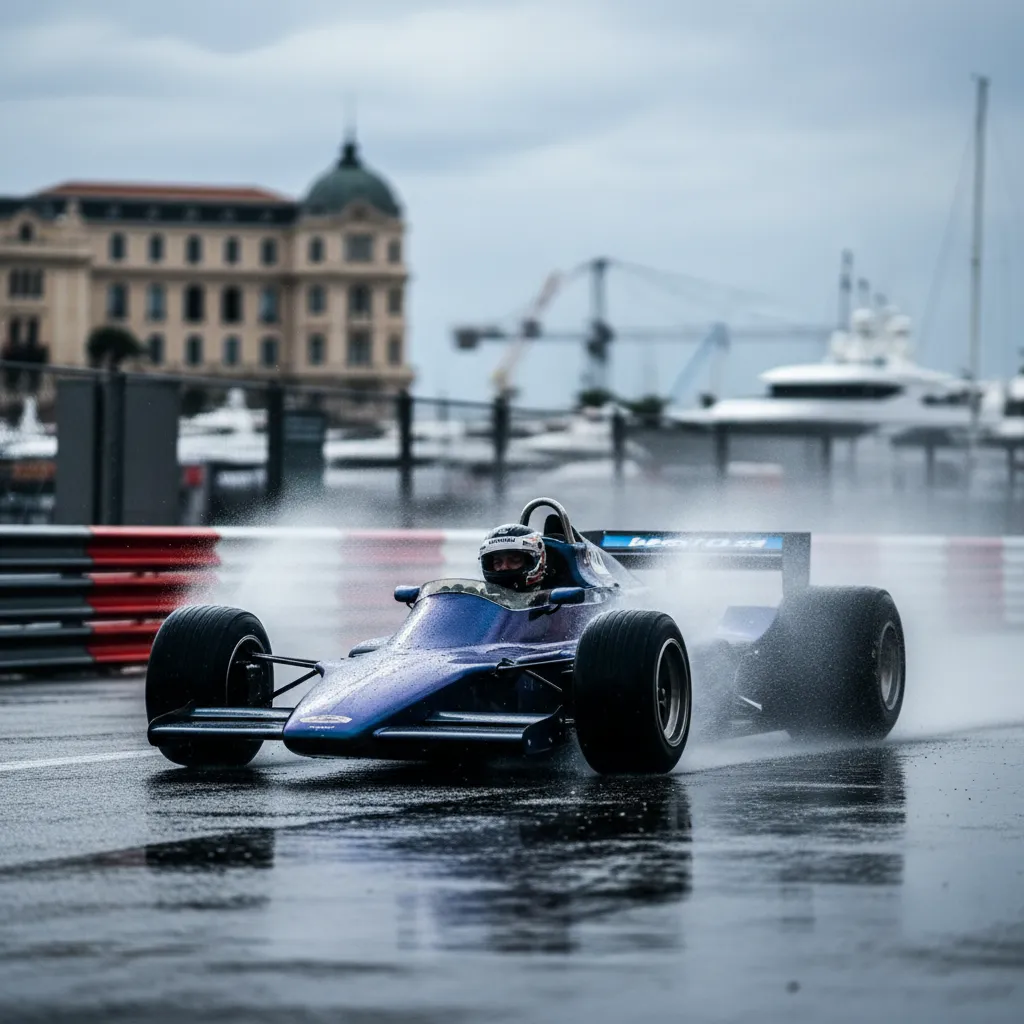
A Day Etched in Formula 1 History
Thirty years ago, on a day that would become etched in the annals of Formula 1, Olivier Panis achieved the pinnacle of his racing career. In a race that defied expectations and tested the mettle of every driver on the grid, the Frenchman secured his only Grand Prix victory at the iconic Monaco circuit. It was a triumph born from chaos, a testament to perseverance, and a moment that would forever define Panis’s journey in the sport.
The 1996 Monaco Grand Prix remains one of the most attritional races in the sport’s modern history. Under treacherous, rain-soaked conditions, the legendary street circuit transformed into a perilous obstacle course. What began as a test of skill quickly devolved into a brutal elimination contest, with car after car succumbing to the unforgiving barriers and slick tarmac. For Panis and his Ligier team, it was an opportunity born from adversity.
Panis, who started a lowly 14th on the grid, navigated the mayhem with remarkable composure. While many of his more fancied rivals faltered, including the championship contenders, Panis steadily climbed through the field. Each lap was a masterclass in wet-weather driving, carefully managing his tires and avoiding the numerous incidents that plagued the race. The sheer number of retirements meant that by the closing stages, the fight for victory was between a vastly reduced field.
When the chequered flag finally fell, it was Olivier Panis who crossed the line first, completing a fairytale victory that few could have predicted. His triumph marked the first win for a French driver at Monaco since Alain Prost in 1987 and remains the sole Grand Prix victory of his career. The jubilant scenes that followed underscored the magnitude of the achievement, a moment of pure, unadulterated joy for driver and team alike.
Looking back, the 1996 Monaco Grand Prix serves as a stark reminder of the unpredictable nature of motorsport. It was a day where strategy, luck, and sheer driving talent converged to create an unforgettable chapter in Formula 1 lore. For Olivier Panis, it was the culmination of years of dedication and a singular moment of glory that cemented his place in racing history. The conditions were so severe that only three cars finished the race on the lead lap, a testament to the attrition rate.
1996 Monaco Grand Prix: A Race of Attrition
The challenging conditions at the 1996 Monaco Grand Prix led to an exceptionally high number of retirements, showcasing the demanding nature of the historic street circuit. According to official Formula 1 records, the race saw a significant number of drivers unable to finish.
| Driver | Car | Status |
|---|---|---|
| Olivier Panis | Ligier JS43 | Winner |
| David Coulthard | Williams FW18 | Retired |
| Heinz-Harald Frentzen | Sauber C15 | Retired |
| Mika Hakkinen | McLaren MP4/11 | Retired |
| Michael Schumacher | Ferrari F310 | Retired |
The victory was a significant moment for the Ligier team, and it highlighted Panis’s skill in difficult conditions. His performance that day is often cited as an example of how a driver can seize an opportunity when the unpredictable nature of racing presents itself. You can find more details about the 1996 season on the official Formula 1 website.
Panis’s career in Formula 1 spanned several seasons, with stints at teams including Ligier, Prost Grand Prix, and Toyota. While Monaco remained his standout achievement, his contributions to the sport are remembered with fondness by many fans. The 1996 race, however, remains the undisputed highlight, a performance that defied the odds and captured the imagination of the motorsport world. Many consider this race to be one of the greatest upsets in Formula 1 history, a sentiment echoed by various motorsport publications such as Autosport.
Monaco’s Infamous Grasp: A Race of Attrition
Thirty years have passed since Olivier Panis etched his name into Formula 1 folklore with a victory at the 1996 Monaco Grand Prix. This wasn’t a win built on sheer pace or dominant performance; rather, it was a triumph born from sheer survival on one of motorsport’s most unforgiving circuits. The principality, with its narrow streets and unforgiving barriers, proved to be the ultimate equalizer, turning what should have been a celebrated race into a brutal test of attrition for the entire grid.
From the outset, the challenging conditions at Monaco set the stage for a day of mayhem. Rain, a frequent visitor to the historic street circuit, lashed down, transforming the asphalt into a treacherous, slick surface. This immediately amplified the already immense difficulty of navigating the tight confines, where even the slightest miscalculation could send a driver into the infamous barriers. The legendary status of the Monaco Grand Prix is often intertwined with its capacity to humble even the most seasoned drivers, and the 1996 edition was a stark reminder of that enduring truth.
The race quickly devolved into a procession of retirements. Drivers, battling for control on the treacherous tarmac, found themselves succumbing to the circuit’s demands. Mechanical failures, driver errors, and the sheer physical toll of wrestling these powerful machines through the soaked streets saw the field dwindle at an alarming rate. It was a day where simply staying on track and avoiding contact became the primary objective for many, highlighting the immense skill and mental fortitude required to compete at this level.
In the end, it was Olivier Panis, driving for the Ligier team, who emerged from the chaos as the unlikely victor. His performance was a testament to patience and precision, a masterclass in managing a race where the primary opponent was the circuit itself. This victory remains one of the most memorable in recent Formula 1 history, a potent symbol of how the Monaco Grand Prix can, and often does, deliver races defined by survival rather than pure speed. You can explore more about legendary Formula 1 races on Formula1.com.
The attrition rate was exceptionally high, leaving many teams and drivers with a tale of woe. This remarkable outcome underscored the unique challenge that Monaco presents, a challenge that separates the truly exceptional from the merely fast. The 1996 race serves as a permanent fixture in the annals of Formula 1, a potent reminder of the principality’s enduring power to produce unforgettable, albeit often chaotic, sporting drama.
The statistics from that day paint a clear picture of the race’s brutal nature:
| Driver | Team | Grid Position | Finish Position | Laps Completed |
|---|---|---|---|---|
| Olivier Panis | Ligier | 14 | 1 | 75 |
| David Coulthard | Williams | 3 | 2 | 75 |
| Gianni Morbidelli | Footwork | 15 | 3 | 75 |
| Mika Hakkinen | McLaren | 2 | DNF | 72 |
| Rubens Barrichello | Jordan | 7 | DNF | 67 |
The sheer number of retirements meant that only a handful of cars actually completed the full race distance. This statistic alone speaks volumes about the conditions and the difficulty drivers faced. For those who managed to navigate the treacherous circuit without incident, like Panis, the reward was a career-defining moment. The resilience shown by the drivers who finished, even those not on the podium, was a testament to their skill and determination. The BBC Sport archives detail such historic moments in motorsport.
Panis’s Unlikely Ascent to Glory
Thirty years ago, in a Monaco Grand Prix that will forever be etched in Formula 1 lore, Olivier Panis achieved what many considered the impossible. Amidst a chaotic and attrition-filled race, the Frenchman, driving for the Ligier team, began a remarkable climb through the field. What started as a respectable performance in the treacherous Monegasque conditions gradually transformed into a genuine opportunity for glory. The legendary street circuit, known for its unforgiving nature, was proving to be a stern test for the drivers and their machinery.
As the laps ticked by, the field began to thin dramatically. Mechanical failures and incidents sidelined numerous contenders, creating an improbable scenario for Panis and Ligier. He navigated the narrow, winding streets with a blend of precision and sheer determination. Each lap completed was a small victory in itself, a testament to his skill and the reliability of his car. With each competitor that faltered, Panis’s chances of achieving a career-defining result grew, turning the improbable into a tangible possibility.
The roar of the crowd at the principality seemed to sense the historic moment unfolding. They witnessed a driver, not from one of the established powerhouses, but from a team fighting for every point, inching closer to an unimaginable triumph. Panis’s drive was a masterclass in patience and opportunism, a stark reminder that in the unpredictable world of Formula 1, anything can happen. His performance that day became a beacon for underdogs everywhere, a symbol of what can be achieved with talent, grit, and a bit of luck.
The 1996 Monaco Grand Prix stands as a stark illustration of how a race can be defined by attrition. While some drivers battled for outright pace, others were engaged in a war of survival. Panis, through sheer tenacity and brilliant driving, managed to outlast the competition. His victory wasn’t just about speed; it was about surviving the chaos and seizing the moment when it presented itself. This iconic win is still celebrated by fans of the sport, a testament to one of the most surprising results in modern Formula 1 history. For more on the history of the Monaco Grand Prix, you can visit the official Formula 1 website.
The performance of Olivier Panis in the 1996 Monaco Grand Prix was truly exceptional, especially when considering the context of the race and the usual pecking order in Formula 1. His victory, a singular triumph for the Ligier team, remains one of the most memorable upsets in the sport’s history. It highlighted the inherent unpredictability of motorsport and the enduring appeal of an underdog story. The race itself saw a significant number of retirements, a common theme at the challenging Monaco circuit, which often elevates the importance of driver skill and car reliability over raw speed. According to reports from the time, many of the leading cars suffered issues, paving the way for Panis’s remarkable drive.
| Driver | Team | Position |
|---|---|---|
| Olivier Panis | Ligier | 1st |
| David Coulthard | Williams | 2nd |
| Jean Alesi | Benetton | 3rd |
This incredible result for Panis and Ligier was a significant moment, not just for the team, but for the sport as a whole. It demonstrated that with the right strategy, exceptional driving, and a touch of fortune, even the most unlikely drivers can reach the top step of the podium. The echoes of that victory still resonate, inspiring a new generation of drivers to believe in the possibility of the extraordinary. You can find more historical race data on Motorsport Magazine.
“`html
A Career-Defining Moment
Thirty years ago, the unforgiving streets of Monaco bore witness to a Formula 1 race that would etch itself into the annals of motorsport history. The 1996 Monaco Grand Prix, a chaotic ballet of spray, crashes, and attrition, culminated in a victory that few could have predicted: Olivier Panis standing atop the podium. It wasn’t just a win; it was the defining moment of his Formula 1 career, a testament to perseverance and the sheer unpredictability that makes this sport so captivating.
The race itself was a brutal test of driver skill and machine endurance. Under relentless rain, the field was decimated. Cars spun out, contact was inevitable, and the order shuffled with alarming regularity. For Panis, driving for the relatively modest Prost Grand Prix team, it was an opportunity born from adversity. While seasoned rivals faltered, Panis navigated the treacherous circuit with a blend of precision and calculated aggression.
Emerging from the mayhem, Panis found himself in contention for a podium, a remarkable achievement in itself given the circumstances. But as the laps dwindled and more prominent names fell by the wayside, the unthinkable began to take shape. The checkered flag waving for Olivier Panis was more than just the end of a race; it was the culmination of years of dedication and the singular highlight of his Formula 1 career. His victory at Monaco in 1996 stands as a powerful reminder that in the unpredictable world of motorsport, the impossible can indeed become reality. Thirty years on, the memory of that chaotic Grand Prix and the unexpected triumph of Olivier Panis continues to resonate, a cherished chapter in Formula 1’s rich history.
Panis’s victory was a significant upset, showcasing the potential for underdog success in Formula 1. It underscored the importance of reliability and driver acumen, especially on a circuit as demanding as Monaco. The win provided a massive boost to the Prost team and cemented Panis’s place in the sport’s lore. For fans and pundits alike, it remains a classic example of how a driver can seize their moment when fortune and skill align. You can revisit some of the most memorable Monaco Grand Prix upsets on Formula1.com.
The conditions that day were so extreme that they significantly impacted the final classification. Only a handful of cars managed to see the checkered flag, a stark indicator of the race’s difficulty. This attritional nature of the 1996 event is often cited as a prime example of how weather can dramatically alter the competitive landscape in Formula 1. The performance of the remaining drivers was exceptional, a true test of nerve and skill under immense pressure.
| Driver | Team | Position | Laps Completed |
|---|---|---|---|
| Olivier Panis | Prost Grand Prix | 1st | 75 |
| David Coulthard | McLaren | 2nd | 75 |
| Heinz-Harald Frentzen | Sauber | 3rd | 75 |
| Johnny Herbert | Sauber | 4th | 75 |
| Mika Salo | Tyrrell | 5th | 75 |
| Norberto Fontana | Sauber | 6th | 74 |
The 1996 Monaco Grand Prix is a race that continues to be discussed among Formula 1 enthusiasts. It serves as a potent reminder that even in a sport often dominated by technological prowess and established hierarchies, unexpected heroes can emerge. Panis’s drive that day, against a backdrop of chaos and fading hope for many, remains an inspiring chapter in the sport’s storied history, a moment captured by many motorsport photographers and celebrated by fans worldwide. The spirit of that victory can still be felt today, inspiring a new generation of drivers to dream big. For more on the history of Formula 1, explore the official Formula 1 history section.
“`


