A Generation’s Wait is Over
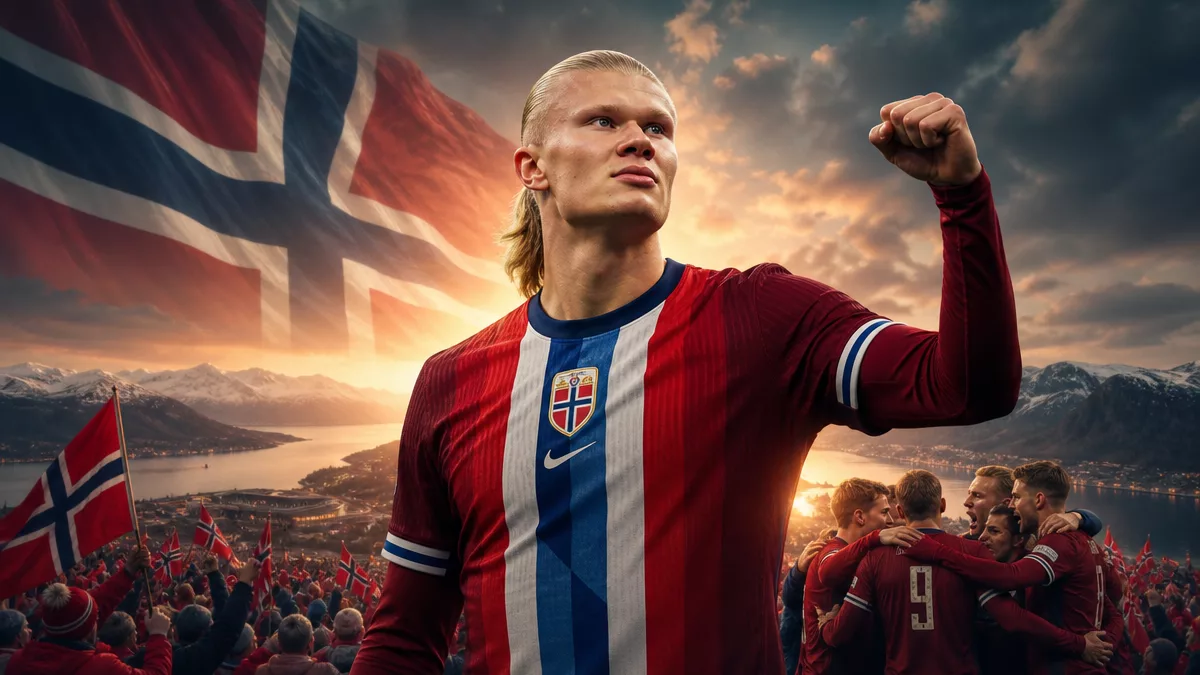
For twenty-eight long years, the Norwegian national football team existed on the periphery of major international tournaments. A nation that once celebrated a famous victory over Brazil at the 1998 FIFA World Cup had since watched every global showpiece from home. Generations of talented players came and went, but the final hurdle remained insurmountable. That is, until the arrival of a force of nature, a player whose individual brilliance is so profound it has fundamentally altered the tactical and psychological landscape of his national team. That player is Erling Haaland, and his transformation from a prodigious goalscorer into a complete offensive system has been the driving force behind Norway’s euphoric return to the world stage at the FIFA World Cup 2026. The journey was not just successful; it was dominant. Under coach Stale Solbakken, Norway navigated their qualifying group with a perfect record, a feat managed by only a handful of European nations, emphatically signaling that their return was no fluke.
The Unstoppable Goal Machine
At the heart of Norway’s resurgence is a statistical anomaly that almost defies belief. Erling Haaland’s goalscoring is not just prolific; it is historic. Since his debut in 2019, he has shattered national records, becoming the country’s all-time leading goalscorer before even reaching his mid-twenties. The 2026 World Cup qualification campaign was a masterclass in clinical finishing. Haaland topped the global scoring charts, finding the net 16 times in just eight matches, an astonishing average of two goals per game. His impact has been immediate and quantifiable. In the years since Haaland became a central figure, Norway’s points-per-game average in competitive matches has skyrocketed, increasing by an incredible 68% compared to the seven years prior to his debut, according to a Transfermarkt analysis. His presence has turned a competitive side into a dominant one, culminating in an 11-1 demolition of Moldova during qualifying, a match where Haaland himself scored five goals. Even on the grandest stage, he has not faltered, netting braces in his first two World Cup matches against Iraq and Senegal, immediately entering the conversation for the Golden Boot.
Erling Haaland’s International Dominance for Norway
| Competition | Appearances | Goals | Assists |
|---|---|---|---|
| Total for Norway | 52 | 59 | Not specified |
| FIFA World Cup 2026 Qualifiers | 8 | 16 | 3 |
| UEFA Nations League | 19 (across multiple seasons) | 19 | Not specified |
Statistics sourced from FIFA and Wikipedia.
More Than Goals: The Gravitational Disrupter
To measure Haaland’s influence solely in goals is to miss the broader, more seismic impact he has on the pitch. His presence is a tactical disruptor. Opposing teams can no longer afford to play a high defensive line against Norway. The fear of Haaland’s blistering pace and intelligent runs forces defenses to retreat, often 10 to 20 meters deeper than they normally would. This retreat creates vast pockets of space between the opposition’s defense and midfield, a tactical promised land where creative players can thrive. Suddenly, Norway’s midfielders have more time on the ball, facing the goal with passing lanes that previously didn’t exist. The entire geometry of the game changes before Haaland even touches the ball. This phenomenon, often seen at his club Manchester City, has been successfully transferred to the international stage. He pins central defenders, narrows full-backs, and creates a constant state of anxiety, which in turn elevates the entire team’s offensive potential.
The Guardiola Evolution
Haaland’s transformation into a complete offensive weapon has been accelerated under the tutelage of Pep Guardiola at Manchester City. While already a world-class scorer at Borussia Dortmund, his time in the Premier League has added new dimensions to his game. Guardiola, a manager once dogmatically devoted to intricate passing and midfield control, has adapted his system to embrace a more direct, vertical approach centered around Haaland. At City, Haaland became the focal point of a tactical shift, providing an outlet for direct balls that could bypass a high press and a physical presence in the box that demanded a different style of service. This evolution has directly benefited Norway. Haaland returned to the national team not just as a finisher, but as a player adept at holding the ball up, linking play, and understanding how his movement can be the key that unlocks a packed defense. He is no longer just the final piece of the attack; he is often the first, turning a long clearance into a sustained offensive possession.
A Partnership Forged in Excellence
A king is rarely crowned without a court, and Haaland’s reign is brilliantly supported by his captain, Martin Ødegaard. The Arsenal midfielder provides the creative spark and sublime vision that perfectly complements Haaland’s power and precision. Their on-field chemistry is palpable, a symbiotic relationship that forms the creative nucleus of the Norwegian side. Ødegaard has spoken of it being a “dream to play with him,” knowing that Haaland’s runs will be perfectly timed and that any well-placed pass is likely to end up in the back of the net. This dynamic was on full display in the 3-2 World Cup victory over Senegal, where an inch-perfect pass from Ødegaard set up a Haaland goal to put Norway in control. Despite being fierce rivals in the Premier League title race, their friendship and professional respect remain steadfast on the international stage. “We’re good friends we’re really close off the pitch,” Ødegaard confirmed, emphasizing that their club competition is left behind when they unite for the national cause.
Solbakken’s Master Plan
Credit for harnessing this golden generation falls to manager Stale Solbakken. A former international who played in Norway’s last World Cup appearance in 1998, he understands the weight of history and expectation. Solbakken has masterfully built a system that plays to the strengths of his superstars without becoming overly reliant on them. He has hailed Haaland as “one of the best strikers in the world,” but is also keenly aware of the need for a balanced team structure. His tactical approach ensures that while Haaland is the centerpiece, players like Alexander Sørloth and Marcus Holmgren Pedersen are integrated effectively, providing alternative threats and crucial support. Solbakken’s praise for Haaland extends beyond his on-field exploits, highlighting his character. “He is one of the best strikers. He is not playing for France or Argentina. He is scoring goals for Norway,” Solbakken stated, underlining the significance of his star’s contributions to a smaller footballing nation.
A Nation Reborn
Haaland’s impact transcends tactics and statistics; it has instilled a renewed sense of belief in an entire nation. After decades of near misses and fading hopes, there is a swagger and confidence about this Norwegian team. “As I’ve said for a long time, I want to achieve things with Norway,” Haaland stated, expressing a deep-seated desire to bring success to his homeland. For a team competing in only its fourth World Cup since 1938, simply qualifying and advancing from the group stage is a monumental achievement. Haaland, for all his global superstardom, remains grounded and realistic about his team’s ultimate chances. When asked about a potential World Cup decider against powerhouse France, his response was laced with humor and humility: “They’re probably going to win against us. They’re probably going to win the whole tournament.” This blend of fierce ambition and pragmatic realism perfectly captures the spirit of the new Norway. They are a team led by a global icon, yet they remain aware of their journey. With Erling Haaland leading the line, Norway is no longer on the outside looking in. They have arrived, and for the first time in a generation, they have the power to disrupt the world order.