A Thriller in Kansas City Sees Both Nations Advance
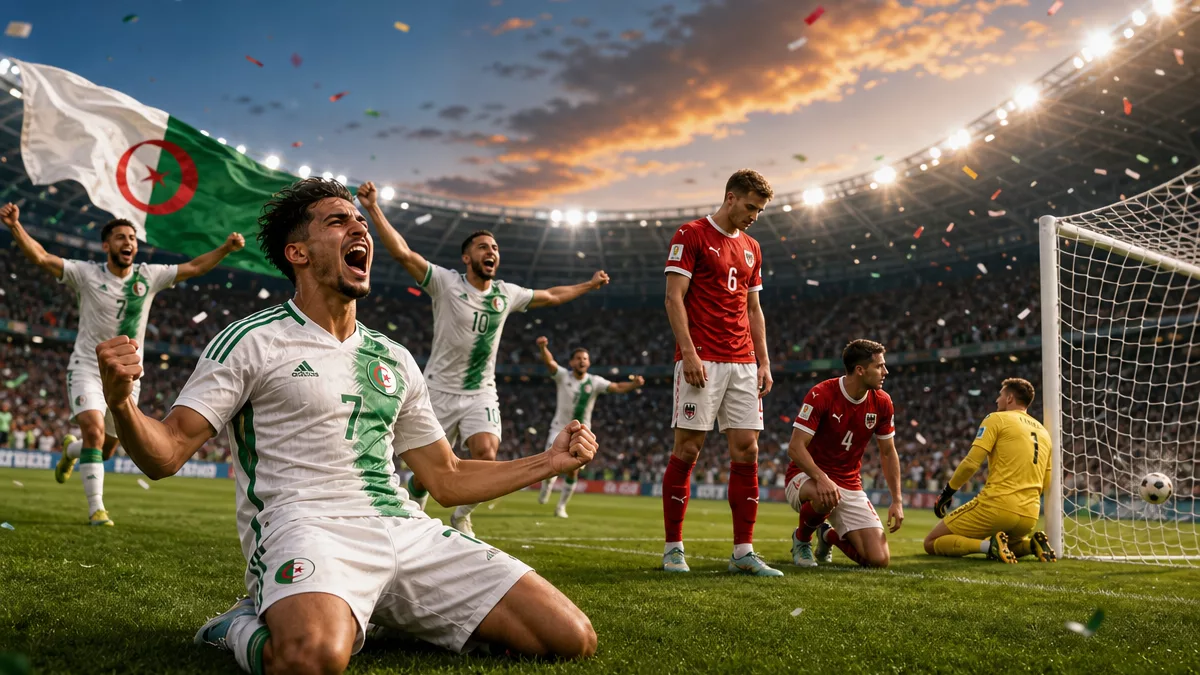
In one of the most dramatic and pulsating matches of the Soccer World Cup 2026 group stage, Algeria and Austria played out a breathtaking 3-3 draw that ultimately saw both nations punch their tickets to the knockout rounds. [9, 28] The Group J finale at Kansas City Stadium was a rollercoaster of emotions, with the lead changing hands and the final qualification spots shifting until the very last second. Algeria captain Riyad Mahrez looked to have secured a heroic victory with a goal in the third minute of stoppage time, only for Austria’s Sasa Kalajdzic to find a dramatic equalizer moments later, ensuring his side finished as group runners-up and Algeria progressed as one of the best third-placed teams. [9, 12] The six-goal thriller was a fittingly chaotic conclusion to a group that, beyond runaway winners Argentina, was a tightly contested affair. [7]
Tactical Battle: Petkovic’s Flair vs. Rangnick’s Press
The tactical chess match was set from the outset. Algeria’s coach Vladimir Petkovic opted for an attacking 4-3-3 formation, designed to leverage the creative talents of his front three: Riyad Mahrez, Amine Gouiri, and Farès Chaïbi. [2, 3] The midfield trio of Houssem Aouar, Nabil Bentaleb, and Ibrahim Maza was tasked with controlling the tempo and feeding the dynamic forwards. [3] In the opposite dugout, Ralf Rangnick set his Austrian side up in their familiar, high-intensity 4-2-3-1 system. [2, 4] This structure was built on a solid defensive foundation, with Nicolas Seiwald and Xaver Schlager acting as a double pivot in midfield to disrupt Algeria’s rhythm, while allowing creative players like Marcel Sabitzer and Konrad Laimer to support the veteran striker Marko Arnautovic. [2, 5] The clash of styles was evident early on, with Algeria looking to dominate possession, boasting 65% by the final whistle, while Austria aimed to press aggressively and create chances through quick transitions. [29]
First Half: An Evenly Fought Opening Salvo
The match began with a palpable tension, as both sides knew the high stakes involved. [7, 31] Austria drew first blood in the 28th minute. A well-timed through ball from David Alaba sliced through the Algerian defence, finding Marko Arnautovic, who coolly finished to put his side ahead. [9, 12] However, the lead was short-lived. Algeria responded with tenacity, and their equalizer in the 41st minute came via a bizarre but brilliant passage of play. A ball from Mahrez bounced curiously off the corner flag, staying in play and catching the Austrian defence off guard. The Algerian captain reacted quickest, feeding right-back Rafik Belghali, who weaved through the penalty area before firing home a superb individual goal to level the score. [9] The first half ended 1-1, a fair reflection of a period where both teams showed attacking intent but also moments of defensive vulnerability.
The See-Saw Second Half
The intensity ratcheted up even further after the break. Austria once again seized the initiative, retaking the lead in the 55th minute with a moment of pure quality. Marcel Sabitzer, a driving force in the midfield all evening, connected perfectly with a cut-back from Nicolas Seiwald, unleashing a powerful first-time shot from the edge of the box that left goalkeeper Oussama Benbot with no chance. [9] Yet, just as in the first half, Algeria refused to buckle. Only five minutes later, they were level again. The impressive Houssem Aouar made a surging run down the left flank before delivering an inch-perfect cross for his captain, Riyad Mahrez, who swept the ball home from close range for his first of the evening. [9] The goal shifted the momentum back in favor of the Fennec Foxes, who began to push for a winner that would secure them second place in the group.
Individual Performances: A Captain’s Display
While several players shone, the spotlight was firmly on Algeria’s talisman, Riyad Mahrez. [6, 25] The 35-year-old winger was at the heart of everything creative for his team, and his performance was rightly recognized with the Superior Player of the Match award. [9] His two goals were expertly taken, showcasing the clinical finishing that has defined his career. Beyond the goals, his vision and ability to draw defenders created space for his teammates throughout the match. His second goal, deep into stoppage time, was a moment of sheer brilliance and composure under pressure that seemed destined to be the match-winner. Though the final result was a draw, Mahrez’s performance was a powerful reminder of his enduring class on the world’s biggest stage. For Austria, Marcel Sabitzer was immense, his goal a highlight in a tirelessly energetic performance that saw him drive his team forward at every opportunity. [8, 24]
A Dramatic Finale for the Ages
As the clock ticked into stoppage time with the score locked at 2-2, it appeared both teams might be settling for a draw that would likely see them through. But Mahrez had other ideas. In the 93rd minute, he latched onto a through ball from Aouar and calmly slotted it home, sending the Algerian fans into raptures. [12, 34] At 3-2, Algeria had leapfrogged Austria into the coveted second spot. However, in a final, unbelievable twist, Austria launched one last desperate attack. In the 95th minute, a header from Michael Gregoritsch found fellow substitute Sasa Kalajdzic, who bundled the ball over the line from close range to make it 3-3. [9, 12] The goal silenced the Algerian celebrations and sparked jubilation among the Austrians, as the final whistle confirmed a result that, remarkably, suited both teams.
Match Statistics: A Tale of Two Styles
The final statistics paint a clear picture of the tactical battle that unfolded. Algeria’s dominance in possession (65% to 35%) and their superior passing accuracy (94% from 706 accurate passes compared to Austria’s 87% from 346) underscore their control of the ball. [29] However, Austria’s more direct, counter-pressing approach was also effective. Despite fewer shots overall, they managed 3 shots on goal, the same number as Algeria from open play, according to some sources. [29] The Expected Goals (xG) metric was incredibly close, with Algeria at 1.59 and Austria at 1.41, suggesting that, despite the goal-fest, the quality of chances created was quite evenly matched. [29] Algeria created 3 big chances to Austria’s 2, but also missed one of their own, indicating a clinical edge from both sides when it mattered most. [29]
| Statistic | Algeria | Austria |
|---|---|---|
| Possession | 65% | 35% |
| Shots on Goal | 5 | 3 |
| Expected Goals (xG) | 1.59 | 1.41 |
| Accurate Passes | 706 (94%) | 346 (87%) |
| Fouls Committed | 3 | 7 |
The Aftermath: Progression and What’s Next
The chaotic draw proved to be a win-win scenario. [28] Austria’s last-gasp equalizer secured them the runner-up spot in Group J with four points and a superior goal difference. [9, 33] They now advance to a Round of 32 clash with Spain. [9] Algeria also finished with four points but in third place, a position strong enough to see them qualify as one of the top eight third-placed teams. [9] Their reward is a knockout tie against Switzerland. [9] For both sets of players and fans, the overriding emotion at the final whistle was relief and excitement for the next stage, after a match that will live long in the memory as a World Cup classic.
Source of statistics: FIFA, FotMob